

A 21-minute drive through downtown Montreal on January 9, 2026, no GPS allowed. OSCP, a local startup building photonic navigation sensors, ran the test to demonstrate what happens when satellite signals vanish. Its optical gyroscope landed within 5.7 meters of the true position. The company's microelectromechanical version missed by 20.5 meters, more than three and a half times wider.
That gap matters more now than it did a few years ago. OSCP announced on October 1, 2026 that it closed $6 million in Series A funding led by New Science Ventures, with Emerging Ventures and 2050 Capital joining the round. The Montreal company makes inertial measurement units for defense, aerospace, and robotics customers who need navigation when GPS signals drop or get jammed.
Signal-loss events have climbed sharply. European and international aviation authorities reported a 220% increase through 2024, a problem that started on battlefields but now disrupts commercial shipping lanes and airport approaches. OSCP's pitch hinges on a regulatory detail: its sensors are manufactured entirely in Canada, sidestepping U.S. export controls under the International Traffic in Arms Regulations. Allied defense buyers and European customers locked out of American supply chains find that appealing, the company says.
Dr. Kazem Zandi, OSCP's founder and CEO, spent years designing sensors at Defence R&D Canada before starting the company. He earned a PhD in engineering physics with a focus on micro-photonics from Polytechnique Montréal and holds 15 patents across the platform. The technical lineage shows. His photonic IMU uses a z-axis optical gyroscope with angular random walk measured at 0.03 degrees per square-root-hour and bias stability below 1 degree per hour—specifications that edge into tactical-grade territory.
The company will use the fresh capital to expand production in Montreal, grow its engineering and sales teams, and bring next-generation photonic inertial sensors to market. OSCP had 18 employees in October and plans to hire toward 30 over the next year, according to reporting from BetaKit. Somu Subramaniam, founder and managing partner of New Science Ventures, joined the board.
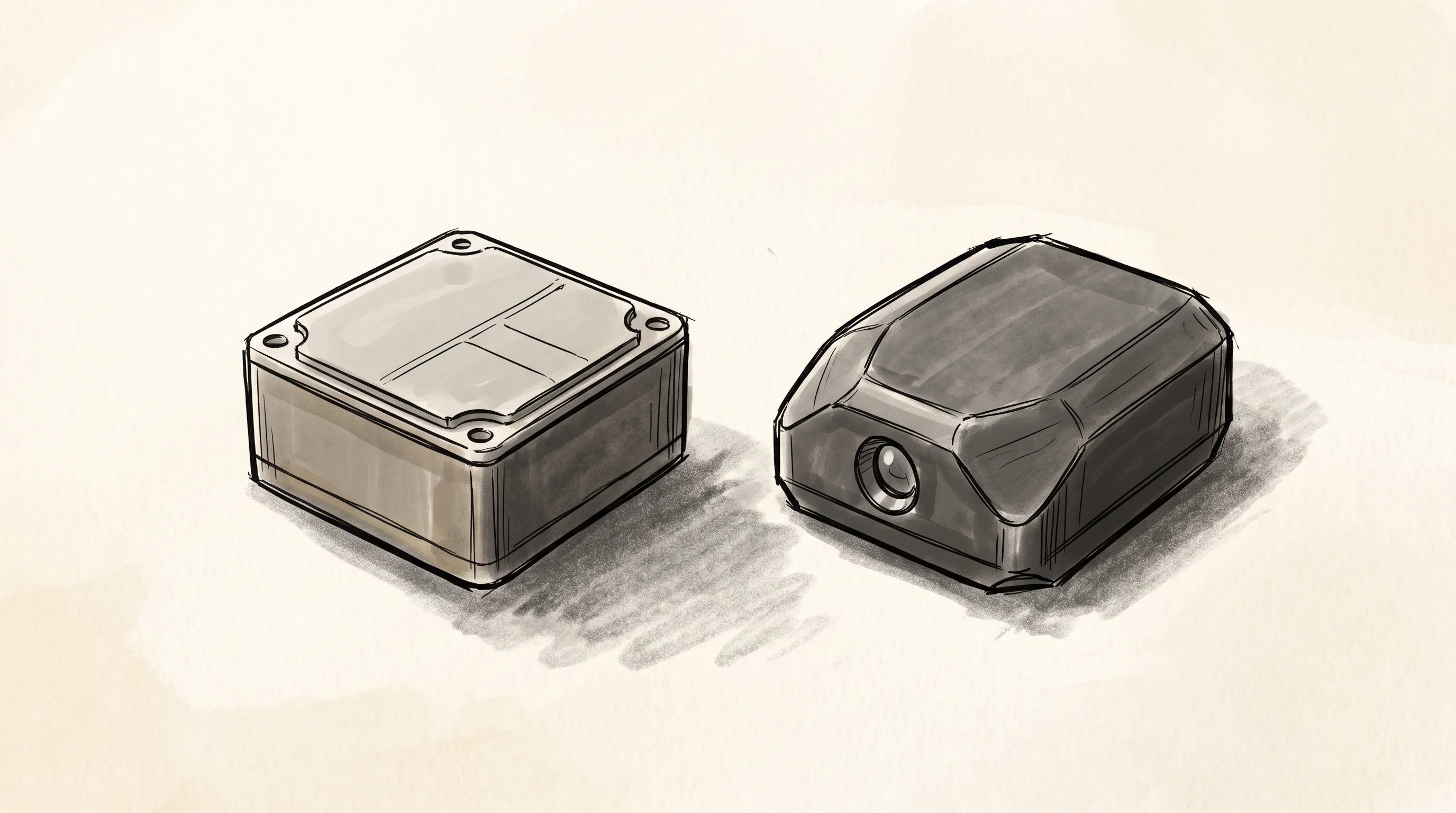
OSCP ships three IMU variants. The MK2M2 is a MEMS unit measuring 40×40×25 millimeters and weighing 75 grams; it draws 1.2 watts and supports ROS 2 and ArduPilot. The MK2E2 tactical photonic IMU incorporates that z-axis photonic gyroscope. The MK2Z navigation-grade prototype, announced earlier this year, targets performance near 0.005 degrees per hour on the z-axis but weighs 475 grams and consumes 4.5 watts. In August, the company launched NavigationGate, an inertial navigation system processing unit that fuses IMU data with GNSS and aiding sensors on-board, outputting continuous position, velocity, and attitude. All designed and built in Montreal.
The ITAR-free angle has opened doors. OSCP announced it won a testing contract through Canada's Innovative Solutions Canada program in March to evaluate four IMU variants with DRDC Valcartier. In September, it qualified as a supplier in three streams of Canada's Defence Drone Initiative Marketplace, a supply arrangement running through 2031 according to procurement documentation. The company named Texim Europe its exclusive distributor for Germany and the Benelux region in August.
"Customers in those markets had been asking for a tactical-grade inertial option not subject to U.S. export control," said Alex Lintott, COO and a partner at 2050 Capital. He described the company's ambition as becoming "the preeminent IMU provider out of Canada" through what he called disruptive technology.
OSCP operates in a sector where venture dollars have flowed to competitors with larger footprints. Anello Photonics, a U.S. maker of silicon-photonic optical gyroscope IMUs, raised $25 million in a Series B-2 round in May to scale production of GPS-denied navigation products. The company had previously raised $28 million in a Series A round in October 2021. EMCORE markets photonic integrated-chip fiber-optic-gyro-based tactical IMUs and lists a non-ITAR TAC-450-320 model on its product pages. Older players include KVH, which has sold FOG IMUs for years, and VectorNav, which makes MEMS tactical INS units and discusses GNSS-outage performance in recent product literature.

The urgency around GPS alternatives has grown as vulnerabilities become harder to ignore. The U.S. Department of Transportation's strategic plan on positioning, navigation, and timing underscored GPS's exposure to jamming and spoofing. DARPA launched its ROCkN program earlier this year, pursuing GPS-independent positioning and navigation technologies. A report from the Royal Institute of Navigation found that only about a quarter of mariners surveyed reported little to no impact from GNSS interference; most cited increased workload and stress.
"Losing the satellite signal used to be a battlefield problem," Zandi said in the announcement. "Now it shows up over airports and shipping lanes. Customers want navigation they can trust when GNSS drops out, and they want it ITAR-free. This round lets us build more of it here, and faster."
The Montreal test in January didn't use an extended Kalman filter or advanced smoothing algorithms. Just heading from the gyroscope and 1 Hz speed aiding. Raw performance, in other words. Whether that translates to market dominance against better-funded rivals remains to be seen. But in a world where GPS can't always be counted on, perhaps that's exactly the point.


