

A five-year-old recovering from a bone marrow transplant typically sees four walls for weeks on end. At Charité – Universitätsmedizin Berlin this fall, some of those children instead climbed into what looks like a glass cocoon on wheels and visited the hospital cafeteria for the first time in a month.
The device is called MOBY P1, built by Berlin startup Sphaira to solve an unglamorous but widespread hospital dilemma: how do you safely move patients who can't risk exposure to germs or who themselves pose infectious threats? The isolation pod has been in clinical use at Charité's pediatric oncology ward since October 2024, and now the company is pushing toward something more ambitious—autonomous navigation through crowded hospital corridors.
MOBY creates a mobile, pressure-controlled environment that maintains ISO Class 3 air cleanliness in positive-pressure mode. It can flip to negative pressure for cases involving contagious diseases. The system carries CE marking under EU medical device regulation 2017/745, according to company specifications.
Charité deployed the pod on isolation ward 39i, where children undergoing bone marrow transplants spend long stretches confined to single rooms. "Parents and children are enthusiastic," Prof. Angelika Eggert, director of pediatric oncology and hematology at Charité, said in February. The hospital launched a prospective cohort study tracking quality-of-life outcomes for severely immunosuppressed pediatric patients using the device, registered in Germany's clinical trials database (DRKS00032818) in October 2023. Charité routinely appears among Europe's top hospitals in global rankings.
The Pandemic Origin Story
CEO Janis Münch founded Sphaira in 2020, when isolation dominated headlines but hospital design lagged far behind infection control needs. "Medical isolation happens every day and everywhere for immunocompromised patients, highly infectious patients, their loved ones and hospital staff," Münch told Medical Design & Outsourcing last November.
The pod's filtration system underwent testing by Deutsche Gesellschaft für Klimahygiene in 2024, the company said. But Sphaira's ambitions extend well beyond a glorified wheelchair bubble.
At University Hospital Schleswig-Holstein in Kiel, the startup is testing autonomous operation—teaching MOBY to navigate hospital infrastructure including automatic doors and elevators without human guidance. Sphaira describes this work as developing "social navigation" and "contextual AI" for human-dense clinical environments, jargon that basically means the pod needs to avoid bumping into doctors, gurneys, and worried family members.
That research feeds into Mitwelt, a separate intelligence platform Sphaira positions as "the intelligence layer for machines in human environments." UKSH plans to deploy the platform across its Kiel and Lübeck campuses, according to the Mitwelt website.
"We're developing a robotics infrastructure layer that's AI-driven but hardware agnostic that deeply integrates into the physical and digital building infrastructure," Münch explained in the November interview. Translation: software that could theoretically run on any robotic device, not just isolation pods.
Crossing the Atlantic

Sphaira operates from both Berlin and Cambridge, Massachusetts, with a U.S. entity incorporated in Delaware. Late last year, the company signed a development agreement with Mayo Clinic, Münch disclosed.
MOBY isn't cleared for sale in the United States yet. The company held its first FDA pre-submission meeting and was leaning toward a De Novo regulatory pathway, with plans to file in the first half of 2026. No public filing confirmation has surfaced in FDA databases as of late 2026.
Following the Money
Sphaira raised €2.2 million (roughly $2.17 million) in a seed round announced in October 2022, according to Tech.eu and CB Insights. Investitionsbank Berlin, a public development bank, led the round. Three angel investors joined: Silke Rickert-Sperling, a cardiogeneticist and Catalpa Ventures co-founder; Florian Meissner, who co-founded and runs EyeEm; and Caroll H. Neubauer, former chairman and CEO of B. Braun of America.
The startup's CTO is Prof. Jens Lambrecht, who also leads the Institute for Robotics and Process Informatics at TU Braunschweig (appointed April 2026). LinkedIn lists 18 employees, though the company's official profile reports between 2 and 10 staff—a discrepancy common among early-stage ventures where contractor relationships blur headcount.
Sphaira participated in Endless Frontier Labs at NYU Stern and NVIDIA Inception, according to its website.
Iterating Toward Production
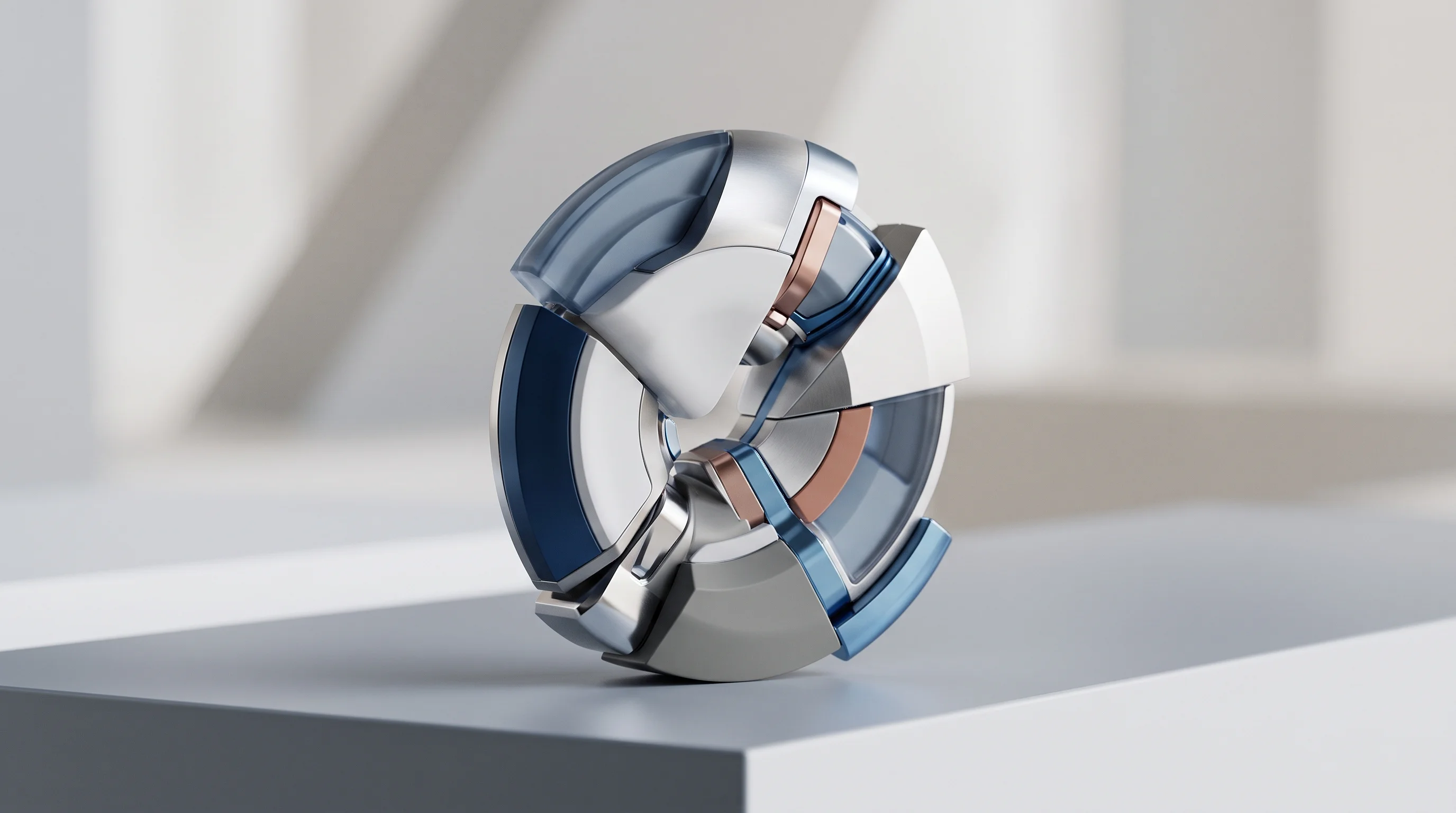
In October, the company posted on LinkedIn that it had shipped "the first build of the production model of MOBY" to TÜV for recertification. That suggests design refinements since the initial CE mark, perhaps in response to early clinical feedback from Charité.
Medical Park Berlin Humboldtmühle appears as another clinical partner on the MOBY website. Prof. Hedwig Deubzer, former director of pediatric oncology at Charité and now chair at Universitätsmedizin Essen, captured the longer vision in company materials: "We want MOBY to be available wherever a child needs a transplant."
Whether Sphaira can scale from a handful of hospital pilots to widespread deployment depends partly on regulatory clearances, partly on proving clinical value, and partly on whether autonomous hospital navigation turns out to be harder than the startup anticipates. For now, a small number of immunocompromised children in Berlin are getting a taste of mobility they wouldn't have otherwise.


