

A London startup promising to bring hormone testing out of clinical labs and into living rooms said Friday it closed roughly $3.3 million from a group of investors betting that women will pay for faster answers about what's happening inside their bodies.
Unravel Health, founded over two years ago, raised €2.96 million in a round led by Conduit EIS Impact Fund and Wrightwood, with backing from Leo Capital, Embryo Ventures, HERmesa and returning investor Zinc VC. The company is developing a palm-sized device it calls the Micro Lab that reads multiple hormones from saliva samples, not the days required for traditional blood work sent to centralized facilities.
The funding, which some trackers labeled pre-seed while others called it seed, will pay for external validation studies, expansion of the biomarker panel, and the initial push toward regulatory approval. Unravel is targeting an early-access program in 2027 through pharmacy chains, digital health platforms and research organizations.
A decade-long technical puzzle
At the core of Unravel's pitch sits a technical challenge that has bedeviled diagnostics companies for years: pulling meaningful hormone measurements from saliva rather than blood. Hormones circulate at vanishingly low concentrations, particularly estradiol, which exists in picogram quantities. Getting reliable readings outside a controlled laboratory environment has proven difficult.
CEO Veronika Bridgman has described it in personal terms. "Reading hormone levels in saliva outside of a lab was our Everest," she wrote on October 16. Fifteen years ago, frustrated by blood tests that told her little about her polycystic ovary syndrome, she built her own tracking system. "Soon everyone will be able to bring the lab home to understand their own symptoms," she added.
The device currently measures estradiol alongside three other hormones the company has not publicly disclosed, according to coverage published in mid-October. Unravel says its patented biosensor technology emerged from more than a decade of research conducted with the University of Glasgow, resulting in what the company says are 18 academic publications. The university's MedTech Innovation Fund notes that Unravel licensed exclusive IP for a non-invasive home device capable of monitoring up to 16 biomarkers in real time.
Whether the technology can deliver on those ambitions at commercial scale remains an open question. As of mid-October, the startup had not released peer-reviewed performance data or secured regulatory clearance in any jurisdiction.
Small team, big ambitions
Bridgman launched Unravel in March 2024 with Liza Levy, the chief commercial officer, and Dr. Alexandra Ego Oti, who oversees medical strategy. Dr. Simon Jackson, a senior biochemist, developed what the company describes as an at-home estradiol assay with one-picogram sensitivity.
The team operates from London headquarters on City Road and maintains wet lab space at Stevenage Bioscience Catalyst, a life sciences hub north of the capital. Company job postings from October suggested plans to consolidate lab operations in London. Business listings point to a staff of around five, though Unravel has not confirmed a headcount.

The startup has drawn support from the SBRI Healthcare Competition's women's health program, with contracts beginning in early 2025, and from the University of Glasgow's MedTech fund.
Eva-Maria Dimitriadis, managing partner at Conduit Connect Ventures, said Friday that "although it's a pre-seed company, a lot of the science has already been proven." She pointed to what she called a persistent data bottleneck in women's hormonal health. "Unravel solves a hard technical problem by measuring multiple hormones accurately, continuously and affordably via saliva," Dimitriadis said.
Crowded field, different approaches
Unravel is entering a market where at least half a dozen startups are chasing variations on the same idea: giving women hormone data without needles, doctor's offices, or week-long waits.
Canadian-U.S. company Eli Health announced a $12 million Series A in June from BDC Thrive for its Hormometer, a saliva device offering phone-based results. The company planned a 2025 public launch starting with cortisol. Germany's inne sells an IVDR-certified saliva progesterone device across German-speaking Europe and the UK for fertility tracking and hormone-free contraception.
Other competitors have turned to urine. India-U.S. startup Inito raised $29 million in December from Bertelsmann India Investments for its multi-hormone urine analyzer. Mira, split between the U.S. and Hong Kong, published clinical data showing its urine device matched ultrasound and serum standards for luteinizing hormone, estrogen, progesterone and follicle-stimulating hormone measurements.
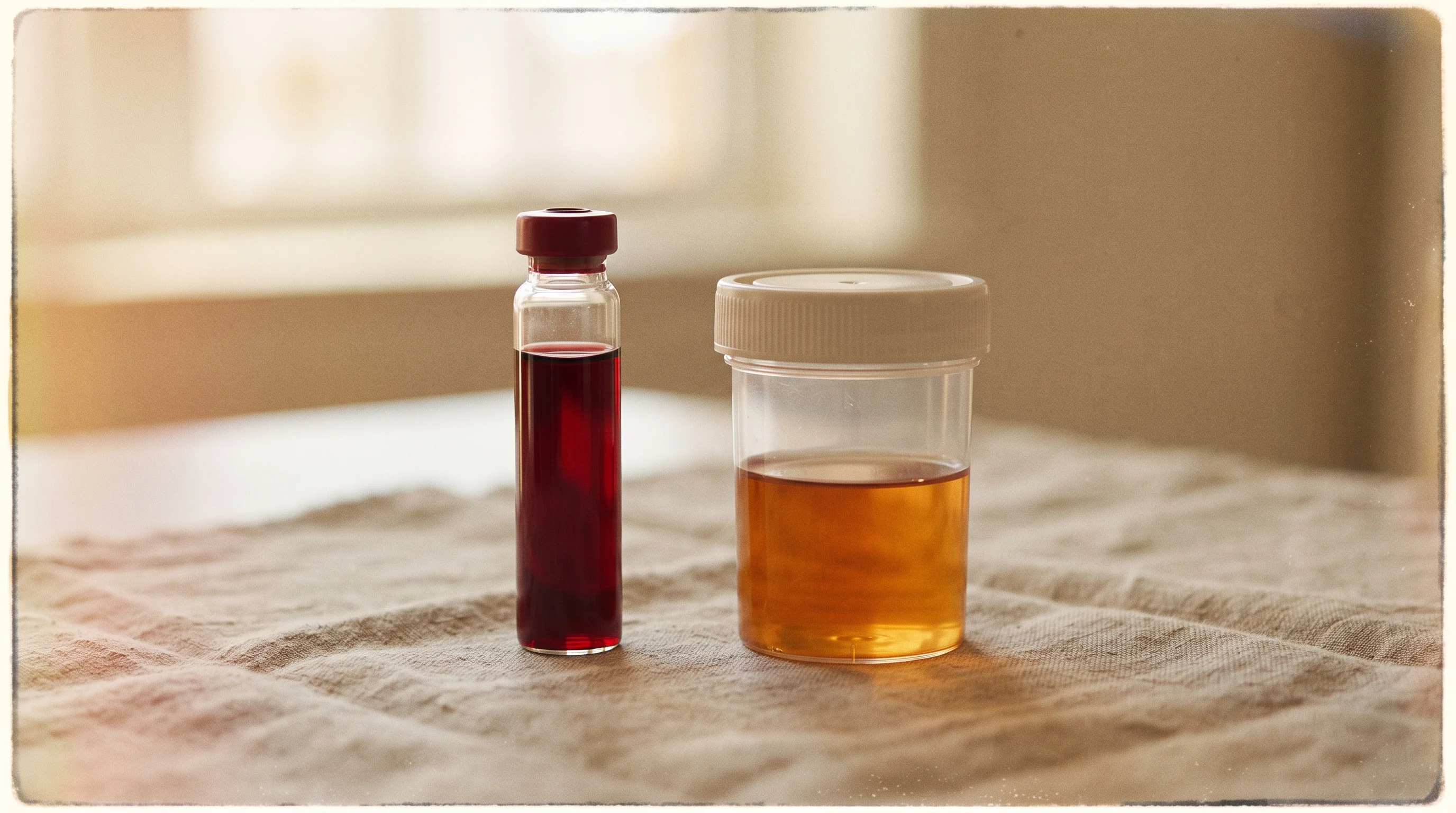
The differing sample types reflect trade-offs between convenience, accuracy and regulatory pathways. Blood remains the clinical gold standard but requires trained collection. Urine is easier to handle but dilution can complicate readings. Saliva is non-invasive and simple but historically harder to measure at the necessary sensitivity thresholds.
Questions ahead
One report suggested the €2.96 million represents an initial close above £2 million within a planned £2.5 million round, indicating the fundraise may still be open. Unravel has emphasized that equivalency studies and regulatory submissions rank among its immediate priorities with the new capital.
The timeline Bridgman outlined, aiming for limited access by 2027, gives the company perhaps two years to validate its technology in clinical settings, navigate regulatory reviews in target markets, and establish the manufacturing partnerships needed to produce devices at scale. Whether those milestones are realistic will depend partly on how smoothly the external studies proceed and how quickly regulators engage with what remains a relatively novel diagnostic category.
For now, Unravel joins a growing cohort of women's health companies betting that consumers, frustrated by the gaps in traditional care, will embrace tools that promise faster, more frequent insights into their hormonal rhythms. The challenge, as always, will be proving the devices work as advertised when they leave the controlled environment of the lab.


