

A San Francisco startup wants to automate your life by listening to everything you say. Vexo opened pre-orders Tuesday for a $199 AI bracelet that promises to book restaurant reservations, draft emails, and update work documents based on overheard conversations—all before you explicitly ask.
The pitch is bold, if unsettling: unlike chatbots that wait for prompts, the Vexo Band supposedly already knows what you need because it's always listening. The company, part of Y Combinator's Fall 2026 cohort, is limiting its first shipments to San Francisco addresses only, a constraint that may reflect production caution or an unusual go-to-market strategy.
The device itself is a screenless woven bracelet packed with sensors—an always-on microphone, accelerometer, heart-rate and skin-temperature monitors, plus haptic feedback for silent alerts. It pairs with a phone over Bluetooth and plugs into existing apps like Gmail, Google Calendar, Notion, and GitHub. The logic, according to Vexo's Y Combinator listing: "Every AI today waits for a prompt. Vexo already has the context."
In practice, that means the bracelet might update your slide deck after overhearing a meeting or remember a gift preference someone mentioned weeks ago and quietly add it to a shopping cart. Planning dinner with a friend? Vexo could send calendar invites without being told. "Is it really always listening? Yes," the company acknowledged in its FAQ. "That's how it remembers what was said and gets things done without you asking." Users can power the device off to stop recording.
The convenience comes with privacy trade-offs that raise questions hanging over not just Vexo but an entire category of ambient AI wearables. The founding team consists of three engineers with pedigrees from Tesla, Amazon, and Shopify. CEO Haris Malik spent time at Tesla working on Optimus, Megapack, and Powerwall projects, and also logged a stint at K-Scale Labs. CTO Farqaleet Kiani's resume includes stops at Tesla, AMD, General Motors, and Geotab, while CPO Vikram Narra worked at Amazon and Shopify. According to Dealroom, Y Combinator made a $125,000 seed investment in September 2026, its standard stake, though Vexo has not disclosed additional funding.
The privacy mechanics are worth parsing closely. Vexo's policy, last revised September 30, describes two recording modes: voice notes and "speech capture," which the company defines as voice-activity-gated capture of the wearer's own speech. According to the privacy policy, a visible indicator light activates during recording, and the company notes that some jurisdictions require all-party consent to record conversations—a disclaimer that may not fully protect users from legal or social friction. Vexo claims on its Y Combinator page that it "never keeps your audio," though the privacy policy allows for transcripts to be stored and used by the AI assistant, a distinction that could matter in practice.
The device does not track location, access Apple Health, or include advertising SDKs, according to Vexo. Analytics run through PostHog with privacy-masked session replay, and data storage sits on Supabase with row-level security. Still, the fundamental tension remains: a device that listens constantly to be useful is, by design, a device that hears everything.
Pre-orders come with some friction of their own. The terms of service, also dated September 30, specify that shipping is "San Francisco only for the first run." Orders placed from outside the city will be refunded. The company offers full refunds on pre-orders until shipment but has not posted a delivery date or disclosed battery life—an omission that RuntimeWire flagged in its October 2 coverage of the launch. The bracelet comes in five colors: Graphite, Pearl, Moss, Blush, and White.
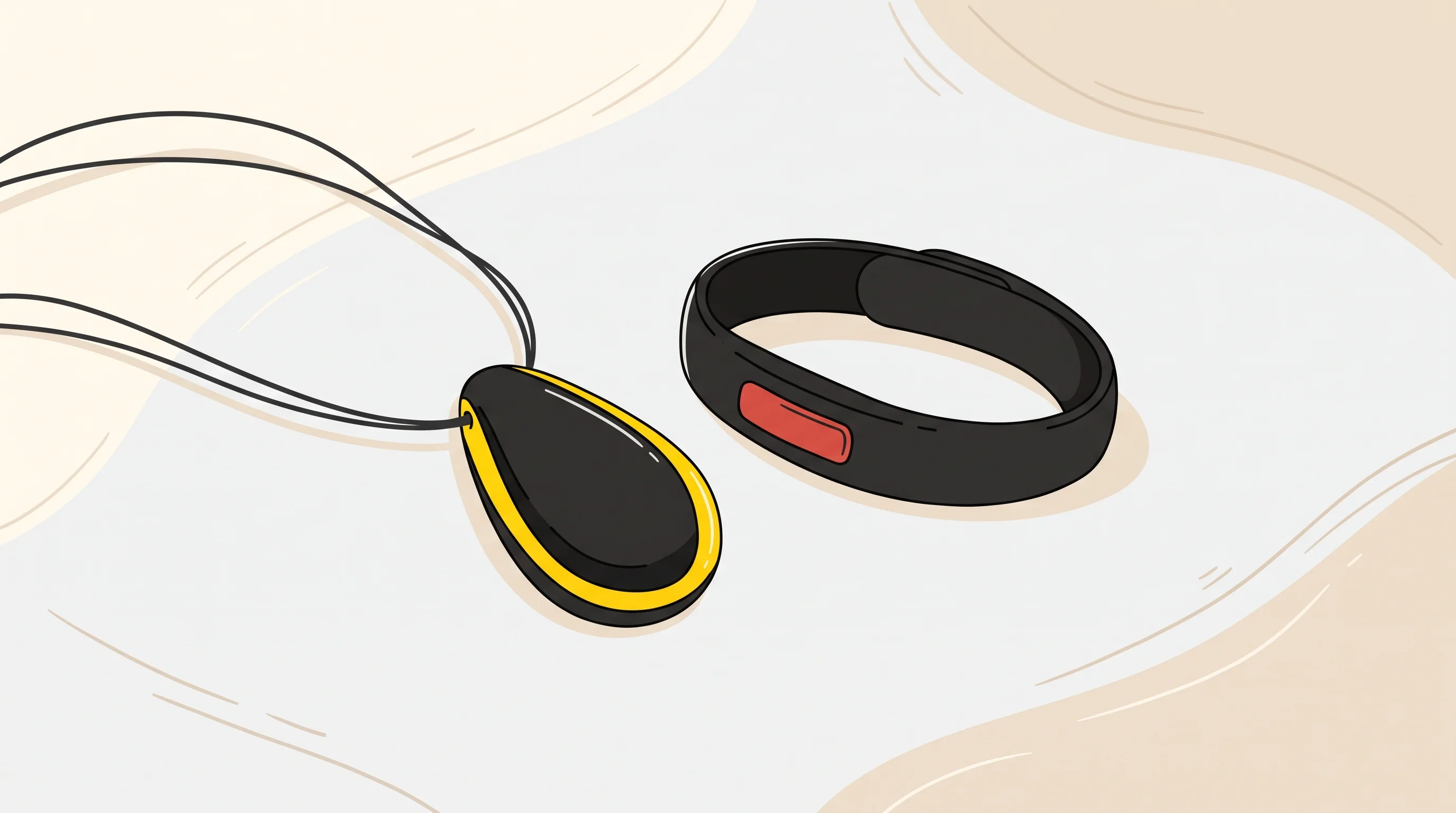
Vexo is entering a market that has seen both momentum and stumbles. Omi sells a pendant or wristband option for $129 on promotion, down from $179, and claims ten to fourteen hours of battery life with worldwide shipping. Amazon's Bee Pioneer bracelet listed a seven-day battery and $49.99 price but is now sold out and was US-only. Friend's AI pendant, priced between $99 and $129, drew considerable attention in 2024 and 2025, much of it focused on the social discomfort of constant audio capture, as WIRED reported. Humane's AI Pin, a different form factor entirely, struggled to gain commercial traction in 2024.
The broader category has faced scrutiny over bystander consent and the ethics of ambient recording. WIRED covered the rise of counter-devices in March 2026, including the Deveillance Spectre I jammer, designed specifically to block always-listening wearables. The tension is real: one person's productivity tool is another's surveillance device, particularly in shared spaces.
Vexo has not shipped any units yet, and no independent reviews exist as of Tuesday. The company declined to say how many pre-orders it has taken or when it plans to expand availability beyond San Francisco. For now, the startup is betting that enough people will trade ambient awareness for ambient assistance—and that the Bay Area, long a testing ground for audacious technology, will be willing to find out if the trade is worth it.


