

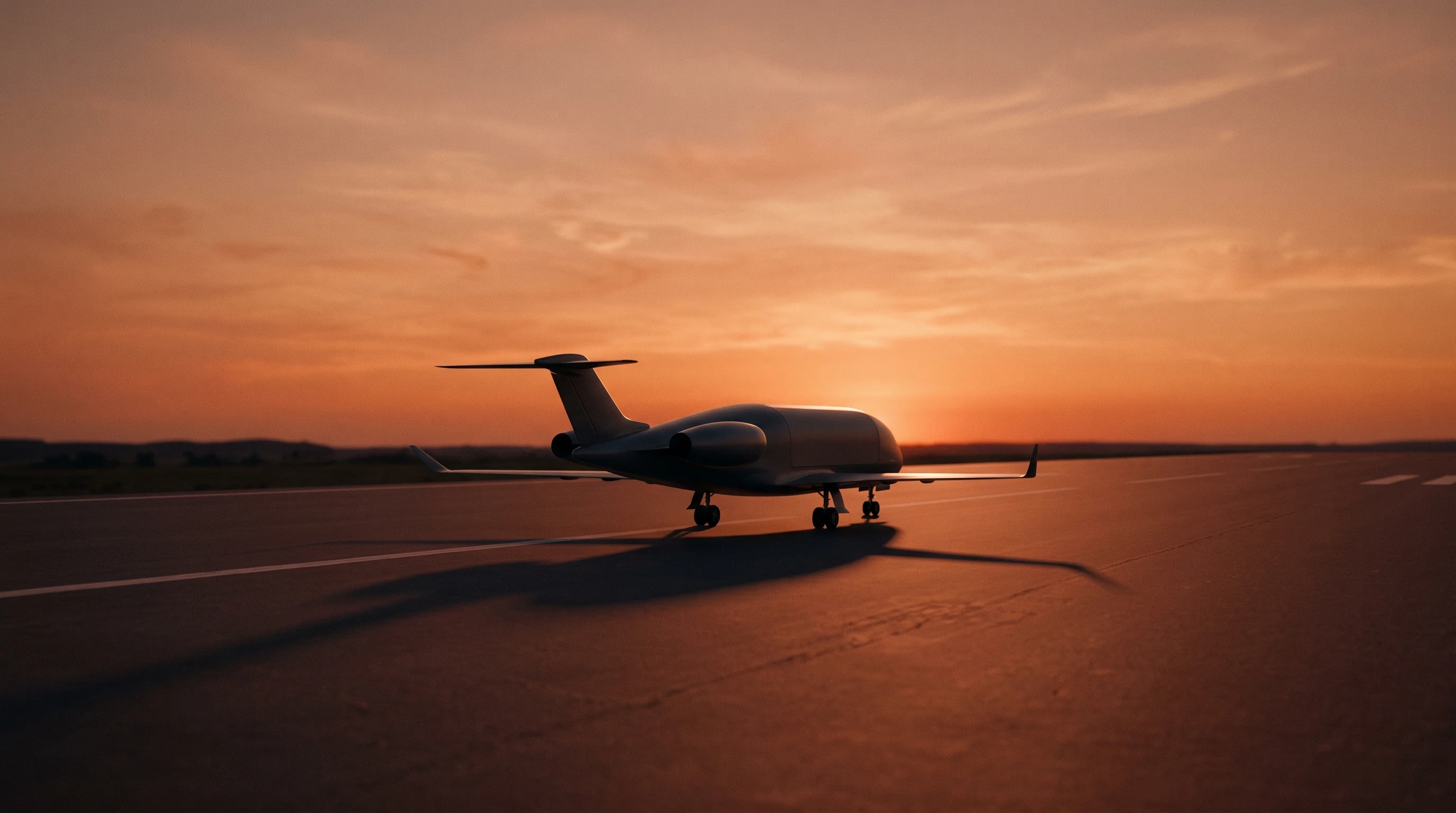
A four-person team in Los Angeles has built an autonomous cargo aircraft that taxis, takes off, flies, and lands without a pilot — accomplishing the feat in two months with backing from Y Combinator.
Aviern, the startup behind the demonstrator, is betting that regulators and the military will soon converge on a shared need: unmanned cargo planes capable of operating beyond visual line of sight. The company targets both defense logistics in contested areas and commercial freight operations as the Federal Aviation Administration inches toward final rules that would unlock routine autonomous flights.
The demonstrator flies fully autonomously with five-hour endurance and 500-mile range, according to Aviern's website. CEO Kush Agarwal and CTO Arvin Singh — both former drone and aircraft engineering instructors at UCLA — have laid out an aggressive timeline: retrofit an existing aircraft for an autonomous coastal mission in the first quarter of 2027, conduct customer demonstrations in the second quarter, and fly their purpose-built A1000 cargo plane by year-end.
The A1000 is designed around a catchy formula: carry a thousand pounds a thousand miles for a thousand dollars per flight. The aircraft would operate from unprepared strips with automated loading, a specification tailored for remote logistics and forward military outposts. Aviern declined to disclose funding beyond its Y Combinator participation, though third-party databases list a $500,000 convertible note dated September 2026.
A Market Taking Shape
Market projections for autonomous cargo aircraft vary widely depending on definitions and scope. Global Market Insights pegged the sector at $1.6 billion in 2024 with projections reaching $19.6 billion by 2034 in data published in 2026. A separate estimate from 360iResearch valued the unmanned cargo aircraft market at $3.46 billion, with growth to $9.64 billion by 2032.
Air freight carriers moved 71.5 million tonnes in 2025, according to IATA's annual review. Network reshaping amid geopolitical disruptions has pressured margins, the trade group noted in its May 2026 air cargo market analysis. Conventional air cargo operates with high per-tonne-kilometer emissions compared to ground modes, historical OECD data shows, though peer-reviewed studies from 2026 suggest mid-mile drones can reduce emissions versus time-critical road movements in certain scenarios, research published in the Transportation Journal found.
Delivery drone networks have scaled rapidly in narrow use cases. Zipline surpassed two million commercial deliveries and raised more than $600 million, the company said in January 2026. Wing and Walmart have announced plans to reach 270 U.S. locations by 2027. eFlight Registry data from October showed 4,384 delivery and cargo drone registrations, with Zipline accounting for 3,530 and Amazon for 792.
Those fleets, however, carry small parcels short distances. Purpose-built cargo aircraft target heavier loads and longer routes, a different technical and regulatory challenge altogether.
Elroy Air's Chaparral carries more than 500 pounds over 450 miles. The U.S. Army awarded the company $46 million in August to mature the hybrid-VTOL platform for contested environments. "Heavy-lift autonomous hybrid VTOL drones will play [a] critical role" in such missions, CEO Andrew Clare said. Elroy completed the first uncrewed autonomous flights under the FAA's Integration Pilot Program in Houma, Louisiana, on September 2, flying under air traffic control from one of the nation's busiest rotorcraft airports.
Regulatory Pressure and Defense Demand
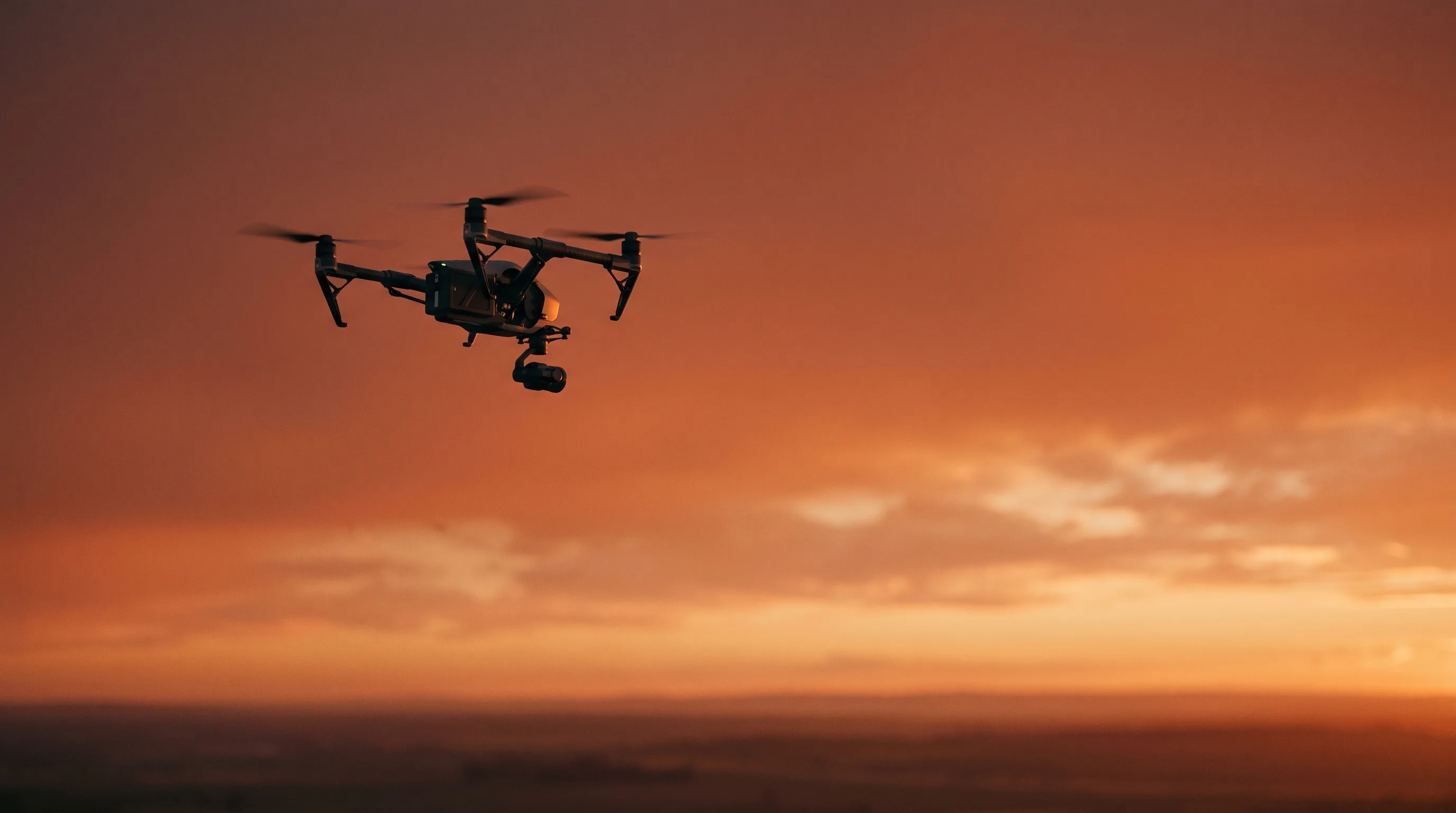
The FAA published its proposed rule for beyond-visual-line-of-sight operations on August 7, 2025. The draft final rule reached the Office of Information and Regulatory Affairs on July 10, 2026, and remains under review, according to DroneAuthority's tracker updated in September. Industry observers note the FAA hopes to publish by year-end, though the agency has not confirmed a timeline. TSA issued a September 4 notice that security roundtables will follow the final rule's publication.
Until Part 108 takes effect, operators pursue Part 135 air carrier certificates with case-by-case waivers — a time-consuming process that limits scalability. The FAA has granted approvals for up to four drones per pilot to certain agencies, Skydio wrote in March. Amazon received BVLOS authorization for College Station, Texas, in May 2024. The FAA's BEYOND program, extended through 2029 by the 2024 reauthorization, continues to issue waivers for companies including Zipline and Skydio.
Defense demand is accelerating development timelines, perhaps more than some companies anticipated. The House Armed Services Committee's fiscal 2027 NDAA report language seeks a DoD strategy on unmanned cargo for contested logistics, Air & Space Forces Magazine reported in June. The Defense Logistics Agency's 2025 Loglines publication emphasizes autonomous platforms and distributed sustainment. U.S. Transportation Command's March 2025 posture statement lists autonomous transportation platforms and long-range aerial delivery as research priorities.
A Defense Department solicitation posted in August on SAM.gov seeks "Autonomous, Attritable Air Delivery Systems" for distributed forces. Pyka delivered its Pelican Cargo autonomous electric aircraft to AFWERX for the Agility Prime program this year. Merlin Labs completed an autonomous landing at Oshkosh on July 20 and is pursuing certification in New Zealand while supporting U.S. defense programs.
The Competition
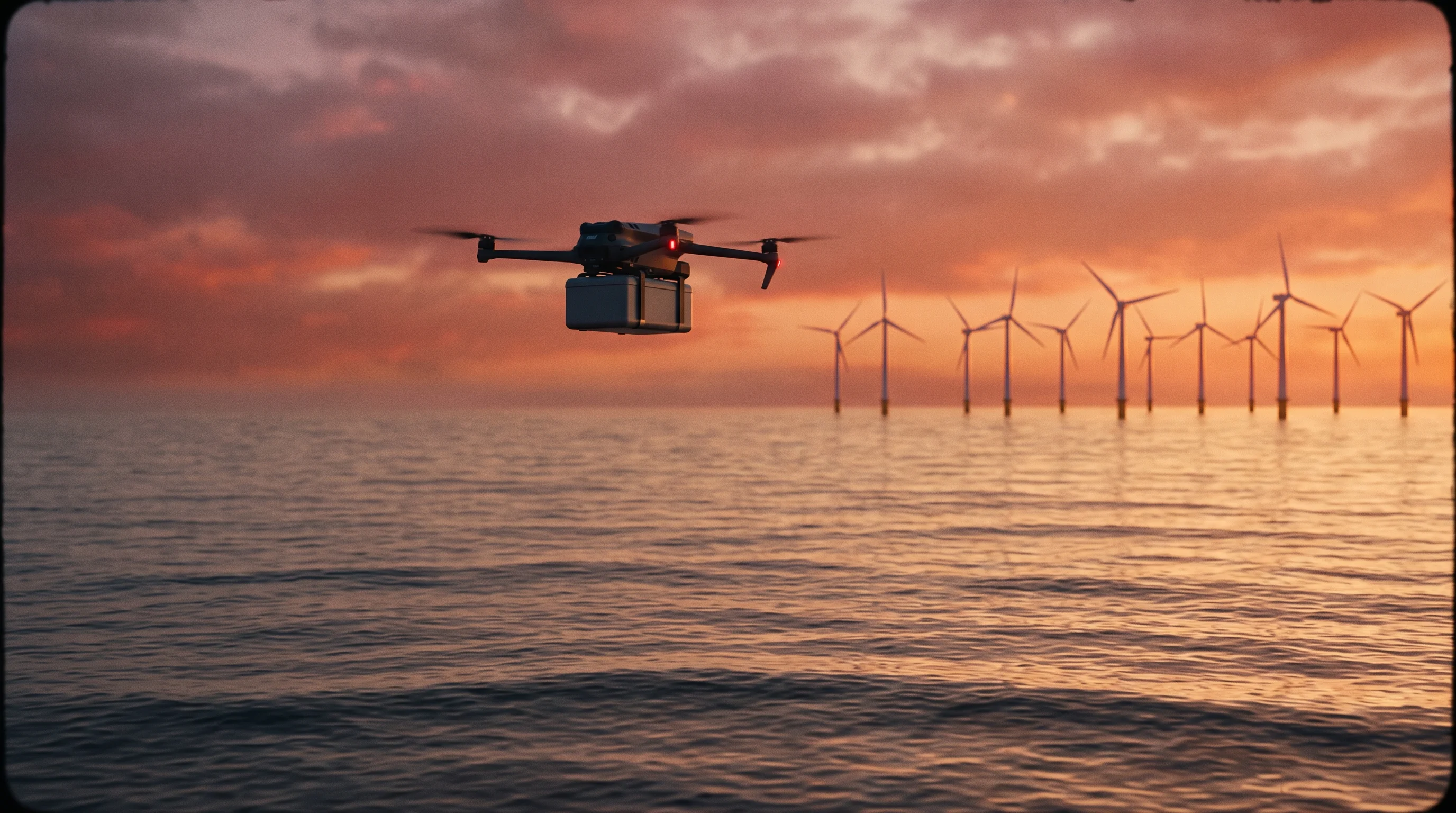
Skyways, a U.S. startup, flew 50-mile round trips to offshore wind turbines in Germany carrying 22-pound payloads in November 2025, working with RWE and Skyports. The company announced expansion into U.S. Gulf of Mexico operations in June and signed a commercial partnership with DSV for offshore logistics on September 21.
Dronamics claims the first EU Light UAS Operator Certificate, allowing self-authorization for certain operations. The Bulgaria-based company launched its Black Swan defense platform with HENSOLDT's airborne early warning solution on February 12. Black Swan is a fixed-wing aircraft with a claimed 350-kilogram payload and 2,500-kilometer range. Dronamics reported 500 flights completed as of November 2025.
Natilus raised $28 million in February to complete its first full-scale Kona blended-wing cargo prototype. The San Diego startup said it holds an orderbook of 570-plus aircraft valued at $24 billion. Target first flight is in 2027 or early 2028, CEO Aleksey Matyushev said in a June interview with Aerospace Global News. Kona is crewed, not autonomous, but competes on middle-mile economics through aerodynamic efficiency.
Reliable Robotics retrofits existing aircraft with autonomy. The company was selected for the FAA's Integration Pilot Program in Albuquerque, with test operations expected to begin in August, according to a June 17 Department of Transportation release. Merlin Labs uses a similar retrofit approach on Cessna 208B Caravans and King Airs, completing autonomous landings and pursuing a Statement of Issue 3 certification path in New Zealand.
MightyFly received FAA authorization for a flight corridor with its Cento hybrid eVTOL in May 2024, Axios reported. Public updates since then have been limited.
What Comes Next
IATA's March 2026 Air Cargo Technology Trends report shows industry split on unmanned aerial vehicle impact timelines, with non-airline respondents more bullish than carriers — a divide that reflects differing exposure to operational and certification realities. Air Cargo Week wrote in June that the strongest cost case for drones lies in mid-mile routes to remote or forward nodes, particularly fixed-wing heavy-lift from short or unprepared strips.
Publication of Part 108 will determine how quickly routine BVLOS scales beyond waivers in the United States. Europe's EASA updated UAS rules in June; operations at SAIL IV require design verification reports, and higher-risk categories push toward certified aircraft. Japan's Level 4 BVLOS framework targets expanded commercialization in fiscal 2026 for remote-region cargo. China revised its Civil Aviation Law effective July 1 and established a new CAAC low-altitude safety department May 14 as part of a national "low-altitude economy" push, English-language government briefings show.
Aviern lists commercial cargo, defense resupply, and humanitarian aid as potential initial use cases. A recent LinkedIn post from the company targets pipeline and utilities integrity management — infrastructure inspection work that already draws multi-drone waivers for public-safety agencies. The founders taught engineering at UCLA; Agarwal previously worked at Matter Intelligence and Fetch.ai, and Singh led Design/Build/Fly projects, according to Y Combinator.
The company's timeline calls for customer demonstrations in the second quarter of 2027, six months before flying the production-intent A1000. That schedule compresses considerable certification risk into a narrow window. Industry trackers note seven Part 135 UAS operators had approvals as of April 30, according to The Flight Brief's March explainer, and each faced approval-specific constraints. No third-party total-cost-of-ownership analysis for the A1000 has been published.
The environmental picture remains complex. Sustainable aviation fuel production is expected to reach around 2.4 million tonnes annually — less than 1 percent of aviation fuel use — and costs remain elevated, IATA said in June. The trade group estimates SAF will deliver up to 65 percent of the sector's 2050 net-zero reductions. Whether autonomous cargo aircraft accelerate or slow aviation's decarbonization depends on energy mix and mission profiles. A January 2026 study in the Journal of Sustainable Development of Transport & Logistics found mid-mile drone competitiveness hinges more on climate and grid decarbonization than technology maturity.
War on the Rocks wrote in August that the "last unmanned mile" challenge in Pacific scenarios remains unsolved. Aviern and competitors are racing Part 108's effective date, defense budgets, and each other to prove autonomous cargo works at scale from unprepared strips.
The FAA rule sits at OIRA. The Army holds the checkbook. And a four-person team in Los Angeles just built a plane in eight weeks — the easy part, as it turns out.


