

Cambridge Heavy Industries has secured $6.2 million in seed funding to build compact fusion reactors that produce tritium, a radioactive isotope that has traded at roughly $30,000 per gram. The October financing round, led by climate investor Azolla Ventures, drew backing from Overlay Capital, the Neta Foundation, P3A Ventures, Massachusetts Clean Energy Center, and veteran venture capitalist Ray Rothrock.
The MIT spinout is wagering that the fusion industry faces a supply squeeze for its essential fuel—one that neither existing heavy-water reactors nor ambitious plans for self-sustaining plants will solve in time.
Global tritium inventories are projected to peak around 27 kilograms by 2027, the company says, with limited near-term production from Canadian heavy-water reactors now approaching retirement. A recent study published in Fusion Engineering and Design projects a shortfall of at least 28 kilograms by 2054 under high-demand scenarios, even assuming future fusion plants manage to breed more tritium than they consume. That's a generous assumption, according to Cambridge Heavy Industries, and one that ignores a chicken-and-egg problem: reactors need tritium to ignite fusion in the first place, but tritium-breeding blankets take years to validate.
Tritium decays at 5.5 percent annually. It can't be mined or synthesized at commercial scale through chemistry. For an industry betting on deuterium-tritium reactions to reach ignition temperatures, that creates what Yun Kai, the startup's co-founder and CEO, calls a bottleneck hiding in plain sight.
Shock Waves in Concentric Rings
Cambridge Heavy Industries is taking an unusual route: inertial-confinement fusion delivered through ring-shaped laser beams that generate converging shock waves. The system employs two picosecond yttrium-aluminum-garnet lasers and a femtosecond titanium-sapphire laser, arranged in concentric rings to launch what the company describes as "additive focusing shocks" into engineered targets.
Kai claims the design achieves compression efficiencies 400 times higher than the National Ignition Facility, reaching 10 gigapascals per millijoule. Whether that figure holds under scrutiny remains to be seen, but the pitch is straightforward: smaller hardware, faster iteration, and a revenue stream years before electricity generation becomes viable.
"We purposely built a small modular reactor. It's tiny, it's benchtop," Kai said. "The small module nature can enable 50 to 80 experiments, 50 to 80 shots per day."
The apparatus fits on a laboratory bench, built from off-the-shelf photonics components sourced in the United States, Europe, and Japan. It's a far cry from warehouse-scale facilities like NIF.
MIT Roots and Ultrafast Spectroscopy
The technology traces back to work in Keith A. Nelson's chemistry lab at MIT, where researchers spent years refining synchronized shock-wave techniques using ultrafast lasers. Nelson, the Haslam and Dewey Professor of Chemistry and a Cambridge Heavy Industries co-founder, has built a career around ultrafast spectroscopy and laser-driven shocks. Steve E. Kooi, a principal research scientist at MIT's Institute for Soldier Nanotechnologies and another co-founder, co-authored foundational papers on focusing shock waves more than a decade ago.
Kai, a former MIT research scientist specializing in laser optics and high-pressure physics, went through the NSF I-Corps program and Blueprint, the tough-tech accelerator run by The Engine, MIT's venture arm. The company lists its principal office at 750 Main Street in Cambridge—The Engine's headquarters—according to a regulatory filing.
MIT's Technology Licensing Office shows a related disclosure titled "Synchronous excitation of multiple shock waves for fusion," with Nelson, Kooi, and researcher Nicolas Pezeril named as inventors.
Isotopes First, Electricity Later
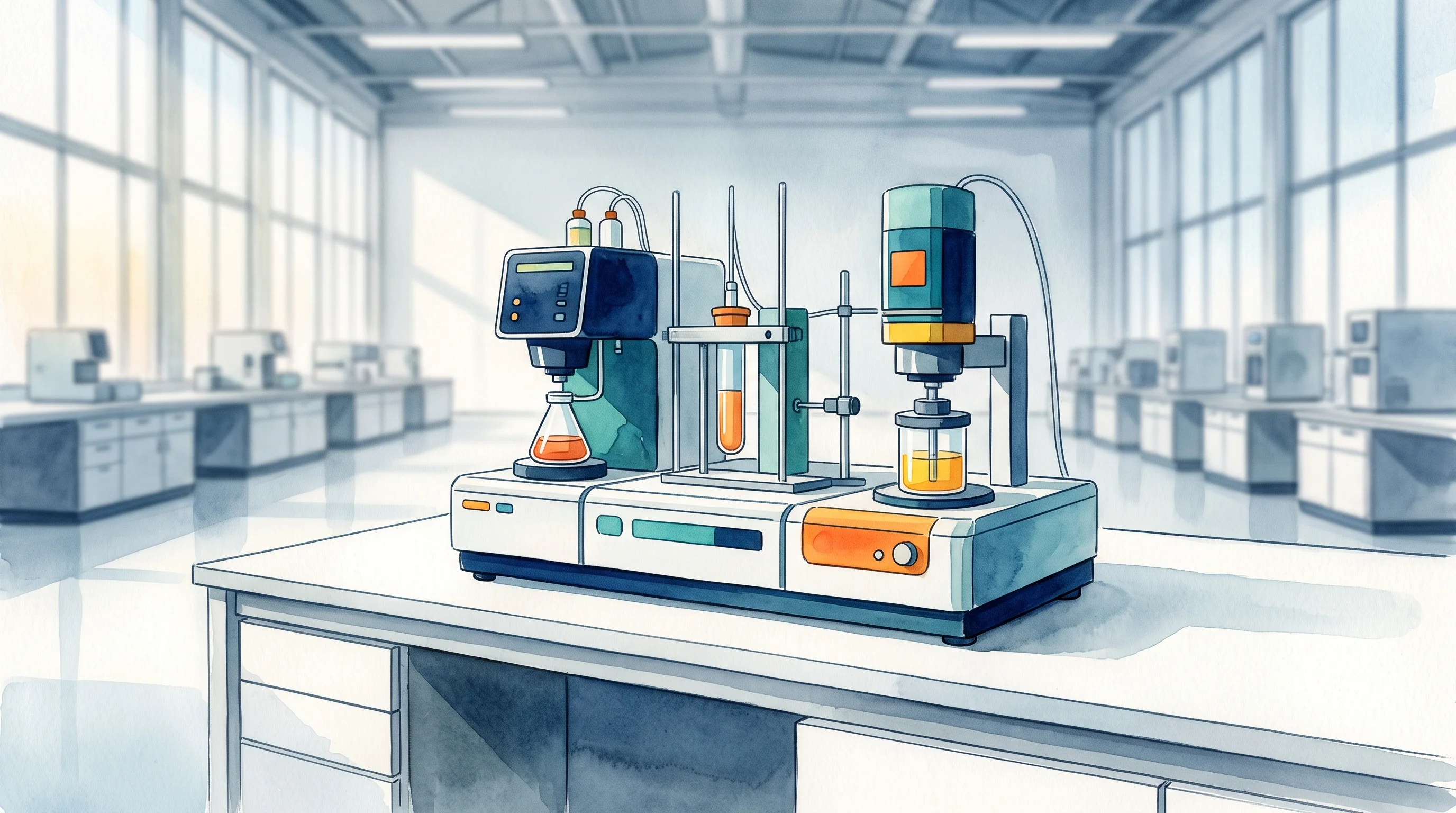
Rather than chase grid-scale power directly, Cambridge Heavy Industries plans to sell tritium and other isotopes from benchtop systems before scaling up. The company envisions a production facility roughly the size of two basketball courts within the next several years, with modular units operating in parallel.
Beyond tritium, the startup is marketing its devices for other isotope production and high-pressure materials research, using swappable target blankets. It's a pragmatic hedge: revenue from niche isotope markets could fund the longer slog toward commercial fusion power.
First-generation fusion plants may struggle to achieve tritium breeding ratios above one, meaning they'll burn more tritium than they generate. That makes early-stage tritium supply more than a logistical detail; it's a precondition for the industry to exist at scale.
Who's Betting on Benchtop Fusion
Azolla Ventures, a Cambridge-based climate investor spun out of Prime Coalition, focuses on capital-intensive clean-energy technologies. The firm raised a sizable fund in recent years and has shown appetite for pre-commercial projects with long timelines. Overlay Capital, an infrastructure investor, launched a dedicated fusion vertical called OC Fusion Partners last year.
Neta Foundation operates as a venture-philanthropy entity offering what it calls "GrantVestments" to university spinouts—hybrid grants and equity stakes. P3A Ventures, a European alternative investment manager, has a sustainability mandate. MassCEC, backed by Massachusetts state funding, provides patient capital to pre-seed and seed companies through its 2030 Fund. Rothrock, the nuclear engineer and longtime venture capitalist who previously backed Tri Alpha Energy, contributed a personal check.
A regulatory filing shows Cambridge Heavy Industries sold $7.16 million of a planned $8.5 million equity offering to 11 investors. Matthew Nordan, co-founder and general partner of Azolla Ventures, is listed as a director alongside Kai and executive officer Raffi Freeman.
A Crowded Field, Different Angles

Cambridge Heavy Industries joins a handful of fusion startups betting on isotope production as a stepping stone. SHINE Technologies, based in Wisconsin, raised a substantial round recently and secured a conditional Department of Energy loan commitment to produce medical isotopes using fusion. General Atomics opened its GALADRIEL laser facility to Cambridge Heavy Industries as a user, providing access to a terawatt-class, ultrashort-pulse platform for inertial-fusion experiments, according to a General Atomics LinkedIn post.
Larger ventures like Commonwealth Fusion Systems and Helion are pursuing grid-scale power plants directly—a longer and vastly more capital-intensive path. Cambridge Heavy Industries argues its benchtop scale allows faster iteration and a nearer-term revenue stream, though it's an open question whether modular tritium production will translate into commercial fusion reactors down the line.
The company, incorporated in Delaware and employing a single-digit headcount, is placing an early bet on a market that doesn't quite exist yet. Whether the tritium shortage materializes as forecast, and whether benchtop fusion can meet it, will likely take years to resolve. For now, the startup has enough runway to find out.


