

MicroAGI, a Munich-based robotics startup, announced on October 9 that it had reached $100 million in annualized revenue just six months after launching Shift, a platform that pays people to wear cameras and record themselves doing everyday tasks. CEO Bercan Kilic disclosed the figure on X, though the claim has not been independently verified. It's a striking assertion for a company that only closed its $55 million seed round in July.
The number invites scrutiny. MicroAGI has declined to break down how much of that revenue comes from recurring data licensing deals versus one-time deployment contracts. The company hasn't named customers publicly. But if the run rate holds, it would place MicroAGI among the fastest-scaling enterprise startups Europe has produced in years, a trajectory that outpaced companies which took far longer to hit similar benchmarks.
The Aerodynamics Engineers Who Pivoted to Robot Hands
Bercan Kilic joined Red Bull Racing's aerodynamics team in 2023, fresh from an engineering program and ready to optimize wind tunnels. He lasted less than two years. Co-founder Yoan Iliev had followed a parallel track: program manager on Airbus's A350, then aerodynamicist at Mercedes-AMG Petronas F1. Both left aerospace manufacturing in 2024 to build robots for factories.
Their insight wasn't about better hardware. Kilic and Iliev believed the real bottleneck in physical AI was training data, not motors or grippers. Foundation models for robotics needed video of how humans actually move their hands through real tasks, hundreds of thousands of hours of it, captured from a first-person view. A robot repeating the same job on the same factory line is a product, they reasoned. Teaching it new tasks required watching humans do those tasks first.
They assembled three more co-founders. Nico Nußbaum, an RWTH Aachen engineer, became CTO. Anton Poletaev came from The Alan Turing Institute's AI for Public Services group. Artjem Weissbeck had previously co-founded Charles, an Accel- and HV-backed WhatsApp commerce startup. German commercial register filings show the company's initial incorporation documents date to June 2025, with formal registration completed on August 26, 2026, and relocation to Munich by July 2026.
Two Products, One Bet
MicroAGI built two products simultaneously. Atlas handles robot deployment: the company fine-tunes general control models to site-specific tasks, runs them on customers' existing hardware, and rents the working system rather than selling robots, according to a July investor memo from Redalpine, one of the seed backers. The approach is model-agnostic and hardware-agnostic. MicroAGI will train a policy for whatever robotic arm or mobile base a factory already owns.
Shift is the data engine underneath. The app pays people up to $20 per hour to wear head-mounted cameras and record first-person video while they cook, clean, assemble products, or perform skilled trades. The footage gets automatically processed through hand detection, segmentation, and anonymization pipelines, then licensed to MicroAGI's Atlas business and select external robotics labs.
By May 2026, US General Manager Harry Kilberg said Shift had "tens of thousands of people" recording across 15 countries, according to Ars Technica. Fast Company reported in June that the platform had collected "hundreds of thousands of hours of data." Those figures came from company promotional materials. They have not been independently verified.
In July, Business Insider reported that five companies were collecting data through the platform and one was preparing to deploy robots in a factory. No customer names have been disclosed.
The Free Cleaning Experiment

Shift launched publicly in New York in late May with an offer that generated immediate attention: free house cleaning. MicroAGI offered New Yorkers complimentary cleaning services in exchange for allowing Shift workers to record the work. Semafor reported on May 29 that Kilberg said the company received "thousands and thousands of bookings."
The privacy implications surfaced quickly. Shift's terms specify that video is de-identified through automated on-device processing and cloud pipelines "within hours up to a week," Fast Company reported in June. But consent withdrawal becomes limited after de-identification completes. According to company statements reported by Fast Company, once the data is anonymized and enters the training corpus, it generally cannot be removed.
"The average person doesn't think about the downstream harms," Veena Dubal, a law professor at UC Irvine, told Fast Company. The article raised questions about what happens when training data captured in someone's home gets used to build commercial systems they'll never see again.
Kilic defended the model to WIRED in July after a similar free private-chef pilot in San Francisco. Shift's first goal, he said, was to "allow people to join the AI economy." The platform's pitch frames gig workers and hourly employees as able to monetize their existing skills by simply recording what they already know how to do.
Shift operates through MicroAGI GmbH in Europe and Shift App US LLC in the United States, according to the platform's terms of service. The company's Google Play listing describes automated hand detection and annotation workflows. Users can review and label their own recordings for additional pay.
After the Headlines
The data-for-service offers stopped appearing in press coverage after July. It's unclear whether MicroAGI still runs them. The company has not published updated operator counts or total hours recorded since June. A September LinkedIn post from Grishin Robotics noted that MicroAGI opened a London office and held a UK industry roundtable with trade officials and BMW executives, but no deployment details followed.
Headcount is murky. Redalpine's July investor memo said MicroAGI employed "around ninety people," though this figure may be outdated. LinkedIn currently lists the company at 11–50 employees, a range that typically lags reality by months. The startup maintains offices in Munich, Zürich, London, and New York, according to job postings.
In September, MicroAGI hired Animesh Garg as Chief Research Officer. Garg was previously a senior staff research scientist at NVIDIA, chief scientific officer at humanoid maker Apptronik, and a faculty member at Georgia Tech. He joined with his "Usable Robots" research team. The hire signals ambition to build in-house AI research capability beyond data collection and deployment tooling.
The Seed Round and the Compute Deal
MicroAGI raised its $55 million seed round in July, led by Hummingbird Ventures with participation from Northzone, LocalGlobe, Village Global, and Redalpine. The company has described it as the largest seed round ever raised in Germany. Valuation was not disclosed.
Six days later, Google Cloud announced a partnership to provide MicroAGI with access to NVIDIA's Blackwell platform: RTX PRO 6000 Blackwell G4 VMs and GB300 NVL72 rack-scale systems for training and inference. "Microagi will leverage our AI stack and the NVIDIA Blackwell platform," Google Cloud wrote on LinkedIn. The compute partnership is critical. Egocentric video models are data-hungry and expensive to train at scale.
Redalpine's investment memo framed the bet around MicroAGI's "deployment and data moat." The firm noted that real learned-model robot deployments globally remain "in the low hundreds," with the largest single site running "around a dozen robots." In such an early market, being able to both collect proprietary training data and handle end-to-end deployment could compound quickly, perhaps faster than the founders expected.
The $100 million annualized revenue claim emerged less than three months after the seed round. Kilic posted it on X on October 9: "We went from 0 to $100M ARR in just 6 months after launching shift." Multiple robotics trade publications repeated the figure. No third-party confirmation or revenue breakdown followed.
The Business Model's Two Engines
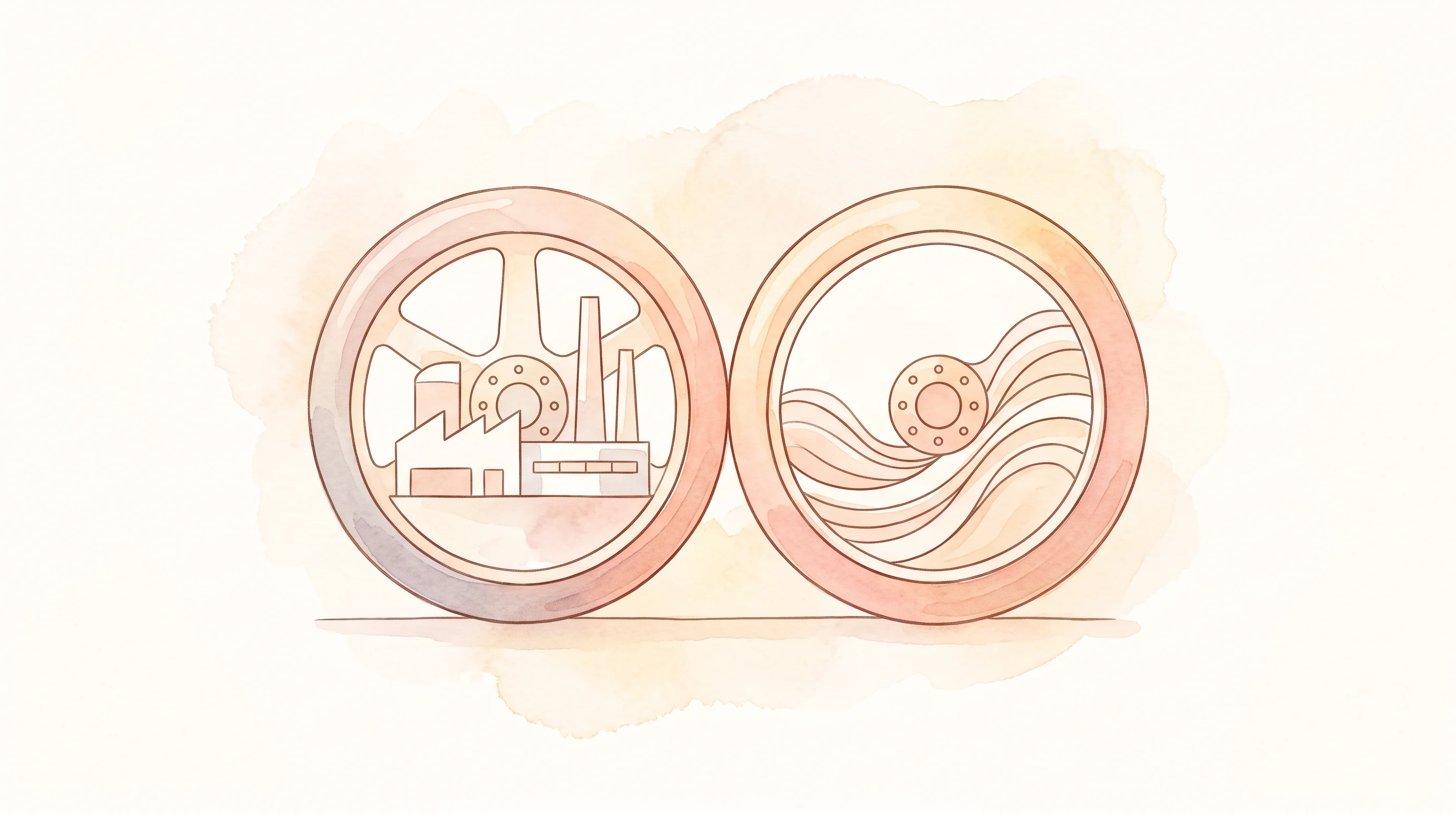
MicroAGI's dual-product model creates unusual dynamics. It sells deployment services while also licensing the data that powers them. If Atlas deployments scale, each new factory customer generates site-specific training data that could make future deployments faster. If Shift's operator base grows, the data library becomes a standalone asset MicroAGI can sell to other robotics companies.
Neither revenue stream is straightforward, though. Factory automation projects are slow. They require deep integration work. They often stall in pilots that stretch across quarters. Data licensing is competitive, with startups like Claru, Luel, and Encord also recruiting people to capture training footage. And the privacy model Shift pioneered remains contested. Paying workers to record their surroundings, then retaining anonymized data indefinitely, sits in a legal and ethical gray zone that no major jurisdiction has fully addressed.
Redalpine's memo acknowledged the execution risks. "Deployment/data advantage [is] critical" precisely because so few companies have managed to put learned models into production at scale. MicroAGI is betting it can do both the data capture and the deployment before competitors close either gap.
What the Long Game Looks Like

Kilic told WIRED in July that the long-term vision is household robots: systems that can cook, clean, and handle domestic labor autonomously. Shift's first batches of cleaning and cooking video were collected with that future in mind. But getting from a $100 million revenue run rate to robots in consumer homes requires clearing technical, regulatory, and cultural hurdles that have stopped every previous attempt.
For now, MicroAGI has capital. It has compute. It has a growing dataset and a remarkable growth claim. Whether it can turn first-person video of human hands into a generation of useful robots remains the harder story to write. The company's October revenue disclosure suggests rapid traction, or at least rapid bookings. What it doesn't answer is whether factory floors and eventually living rooms will accept what MicroAGI is building, and whether the people who recorded those hands will recognize the work their data performs.


