

Skytree, the Dutch direct air capture startup, has secured a €1 million development loan from Invest International to build its first Skypark hub outside the Netherlands, in Iceland, the company said Oct. 6, 2026. The sum is small, but the larger issue is whether a hub that sells CO₂ to local buyers under long-term contracts can scale direct air capture (DAC) without leaning on a single anchor purchaser or one government's budget.
What the loan pays for
Skytree said the money will cover engineering, permitting and site preparation, along with the work of turning letters of intent into binding offtake contracts, the long-term purchase agreements that lenders typically want to see before financing a plant. Commercial installation is slated for 2028, and the company expects operations to begin the same year.
Invest International confirmed the loan the same day and called the project the "first international deployment of Skytree's Skypark concept." It also expects the facility to be running in 2028.
"Our development loan bridges a critical early-stage financing gap," said Melanie Maas Geesteranus, the lender's CEO. She added that Skytree is building a platform that could be "replicated" in markets where reliable CO₂ supply is increasingly scarce.
How a Skypark works
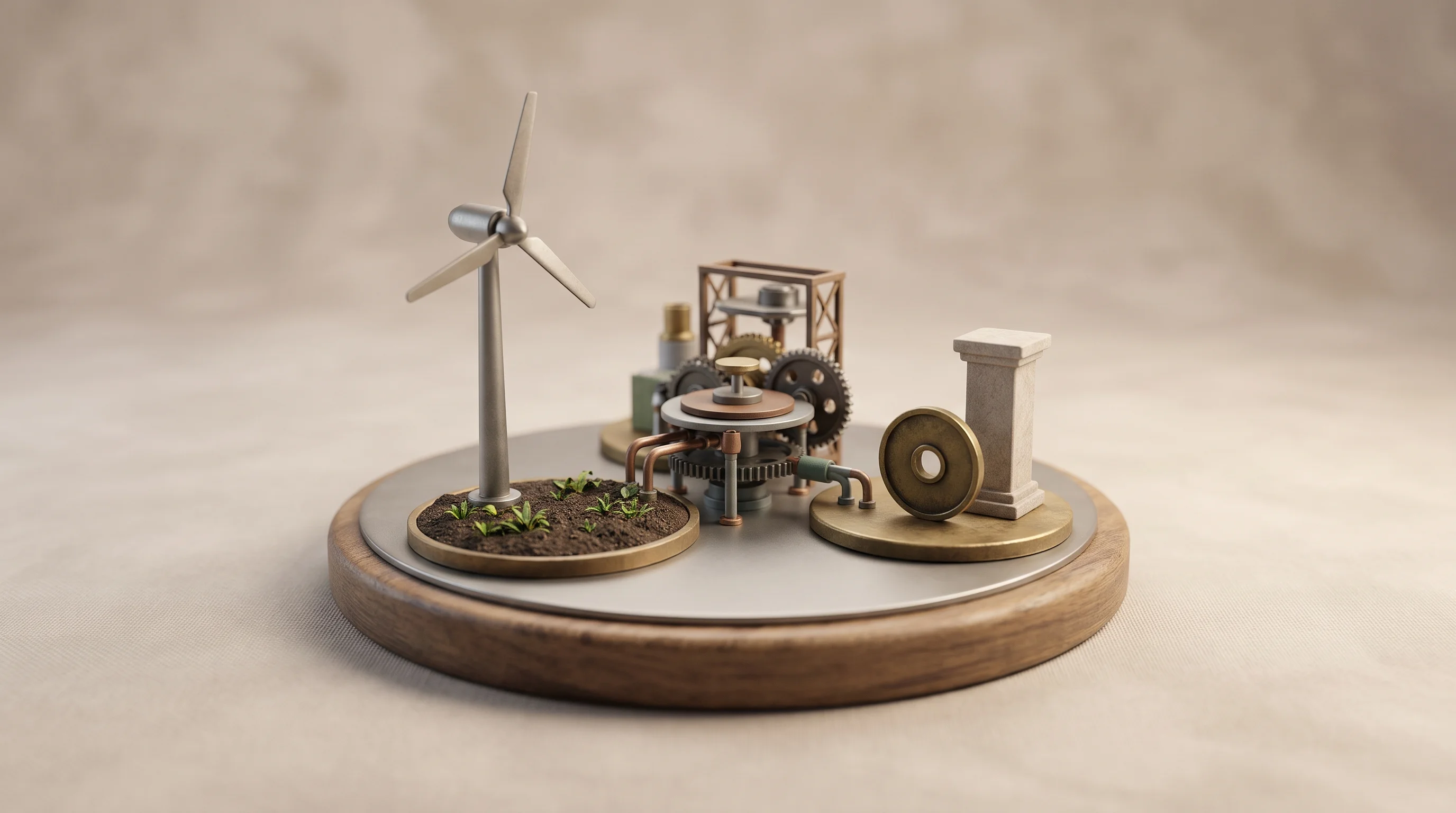
According to Skytree, each Skypark is organized as a project-specific company that brings together three parties. A site and energy partner supplies land and renewable power or heat. Banks or equity investors provide capital, financing the build against long-term, fixed-price offtakes. The third group is local buyers in the merchant CO₂ market, meaning customers who already purchase the gas commercially.
Those buyers include greenhouses, food and beverage companies, and makers of dry ice and food packaging, along with e-fuels developers. In Iceland, geothermal electricity and heat would power the capture, and the company said local, fossil-free supply would replace imported CO₂.
Camille Hanna, Skytree's VP of Skyparks, described the deal as a template and said "the model travels." Every project, she said, follows the same playbook of long-term offtake contracts and stable pricing, with CO₂ produced locally instead of shipped in.
The design departs from the removals-first approach of many DAC developers. Skytree sells CO₂ for use, not only for storage.
Why Iceland

The European Environment Agency's country profile shows Iceland generating close to all of its electricity from renewables, chiefly hydro and geothermal. Skytree also has a prior connection there: on June 17, 2025, it announced a collaboration with Algae Capital to use DAC-derived CO₂ in Icelandic algae production.
Skytree's footing at home
The Iceland project follows a run of Dutch milestones. On Sept. 10, Skytree said the first SDE++ subsidies (the Netherlands' flagship climate-technology support scheme) for DAC in greenhouses had gone to a cohort deploying its Stratus systems. The company put their combined capture capacity at 23,000 tonnes of CO₂ a year, with about €80 million mobilized.
Skytree says its Stratus modules capture 2.5 tonnes a day and use electricity as low as 0.9 MWh per tonne of CO₂. Those figures are the company's own claims, and I have not seen independent verification.
"Dutch greenhouse growers are once again proving their global pioneering role," Rob van Straten, Skytree's CEO, said in the September announcement. The company also said it installed its first commercial Stratus system at Lingezegen Energy on June 3, 2026, supplying fossil-free CO₂ to a greenhouse cluster.
Earlier funding came from a €5.5 million seed round in June 2023 and a €2.5 million EIC Accelerator grant in November 2023, according to Dealroom and HortiDaily.
The market behind the model
Buyer concentration is the risk the hub model tries to sidestep. Fastmarkets reported that Microsoft accounted for close to 90% of tracked offtakes in the first half of 2025, and that a pause in its buying exposed how thin demand is elsewhere. Axios reported that Microsoft had purchased more than 36 million tons, far outpacing any other buyer.
CDR.fyi's May 19 market update found that bioenergy with carbon removal and biochar made up 96% of purchase volume and 91% of delivered volume in 2025. DAC remains a small slice.
Pricing is a second gap. An OPIS/CDR.fyi survey put the average difference between what buyers will pay and what sellers want at $98 per tonne in 2026, down from $107 in 2025, with a projected $48 by 2030.
Skytree's merchant customers sidestep some of that, since greenhouses and food producers already buy CO₂ today. The IEA's Energy Technology Perspectives 2026 puts novel carbon dioxide removal, including DAC, at roughly 1 MtCO₂ a year, with about 80-fold growth by 2035 if every project proceeds. That would still fall short of the 660 Mt the agency says its net-zero scenario requires.
Competitors and neighbors in Iceland
Climeworks runs Mammoth at Hellisheiði, which switched on May 8, 2024, with Carbfix storing the CO₂ underground as mineral. On Sept. 10, Climeworks said upgrades "have more than doubled CO₂ capture performance in upgraded collector containers while reducing operating costs by more than 50%" over 18 months.
Removr has planned a commercial DAC plant at Hellisheiði, also with Carbfix storage; its earlier announcements pointed to 2027, though timelines in this sector tend to move. In the U.S., Occidental's STRATOS faced a facility issue in 2026, though the company said the DAC technology performed as expected during commissioning, according to GeoCDR. Deep Sky, which lists Skytree among its technology partners, issued the first certified DAC credits in North America on June 29, 2026.
Carbfix's planned Coda Terminal, an import and storage hub, lost its Hafnarfjörður site on March 21, 2025, according to RÚV. The company is still evaluating alternatives.
Policy swings
The EU's first delegated act under its carbon removals certification framework, dated Feb. 3, 2026, covers DACCS, BioCCS and biochar. U.S. support looks less stable. A review by the Government Accountability Office noted the $180 per tonne 45Q tax credit for DAC, along with a fiscal 2026 proposal to zero out the annual appropriation for the Office of Clean Energy Demonstrations.
What comes next
Skytree says the development loan will fund the work of converting its letters of intent into binding contracts ahead of installation in 2028. Its newsroom also lists a memorandum on Kenya e-fuels, though the draft gives few details on it. Whether lenders will finance against those contracts beyond a €1 million development facility is, in the end, the test of the model.


