

Swiss Membrane Startup UniSieve Raises $9 Million to Replace Industrial Heat with Filtration
UniSieve, a Zurich-based materials science company, closed a $9 million Series A on October 8, 2026 led by Orano Venture Fund, bringing its total raised to $25 million since launching seven years ago. The round drew participation from Amadeus APEX Technology Fund, Founderful, Zürcher Kantonalbank and Guenat Holding, though the startup declined to share its valuation.
The company makes molecular-sieving membranes designed to replace energy-intensive thermal separation processes with what amounts to very precise filtration. Think of it as replacing the brute force of boiling with the finesse of a molecular strainer, applied to carbon capture and chemical processing at industrial scale.
UniSieve now faces the challenge many hardware startups encounter after pilot validation: proving the technology can deliver commercially across multiple sites at once. The fresh capital will fund that transition, pushing the membranes beyond early adopters in petrochemicals, cement and waste-to-energy into broader deployment.
Molecular Precision at Angstrom Scale
The technology embeds porous crystalline structures into polymer matrices to separate molecules by size rather than temperature. UniSieve uses metal-organic frameworks and zeolites, materials that can be tuned with angstrom-level precision to target specific separations. The company claims energy savings of up to 90% compared to conventional thermal distillation, though those figures likely vary depending on the application and operating conditions.
Core targets include olefin-paraffin separations like propylene from propane, point-source carbon dioxide capture from cement kilns and waste incinerators, and recovery of specialty gases including refrigerants used in semiconductors.
"A new age of separations," CEO Samuel Hess said in the announcement, describing the membranes as compact alternatives to sprawling thermal equipment. UniSieve packages the systems in containers designed to slot into existing plant infrastructure without major retrofits.

From Lab to Smokestacks
The company has live deployments underway, though the number remains modest. Qemetica Soda Polska, a Polish chemicals producer, began testing UniSieve's carbon capture membranes in September 2024. The arrangement makes practical sense for Qemetica, which uses captured CO₂ on-site to manufacture carbonates including soda ash. UniSieve has also piloted systems at a Swiss waste-to-energy facility, according to company disclosures.
These early projects serve dual purposes: validating performance in real industrial environments and demonstrating that the membranes can handle the dirt, vibration and temperature swings that laboratories never quite replicate.
Hess and co-founder Elia Schneider met at ETH Zurich before launching the venture in 2018. The startup now employs roughly 26 people based on LinkedIn data from late September. UniSieve previously raised $5.5 million in seed funding in April 2023, also led by Amadeus APEX, with backing from Founderful (operating then as Wingman Ventures), Ciech Ventures and ZKB.
Why Investors Keep Writing Checks
Jonathan Grosskopf, an investment director at Supernova Invest, which manages the Orano Venture Fund, framed the bet around industrial impact. "Deep tech with the potential to improve industrial performance and impact large industrial value chains," he said. Orano Venture Fund operates as the corporate venture arm of Orano, the French nuclear fuel cycle company, giving it perspective on hard-to-abate emissions.
Wolfgang Neubert, general partner at APEX Ventures, returned for the Series A after leading the seed. "We are reinvesting in UniSieve because we see a company on a clear path from proven technology to a meaningful commercial scale," he noted in the release.
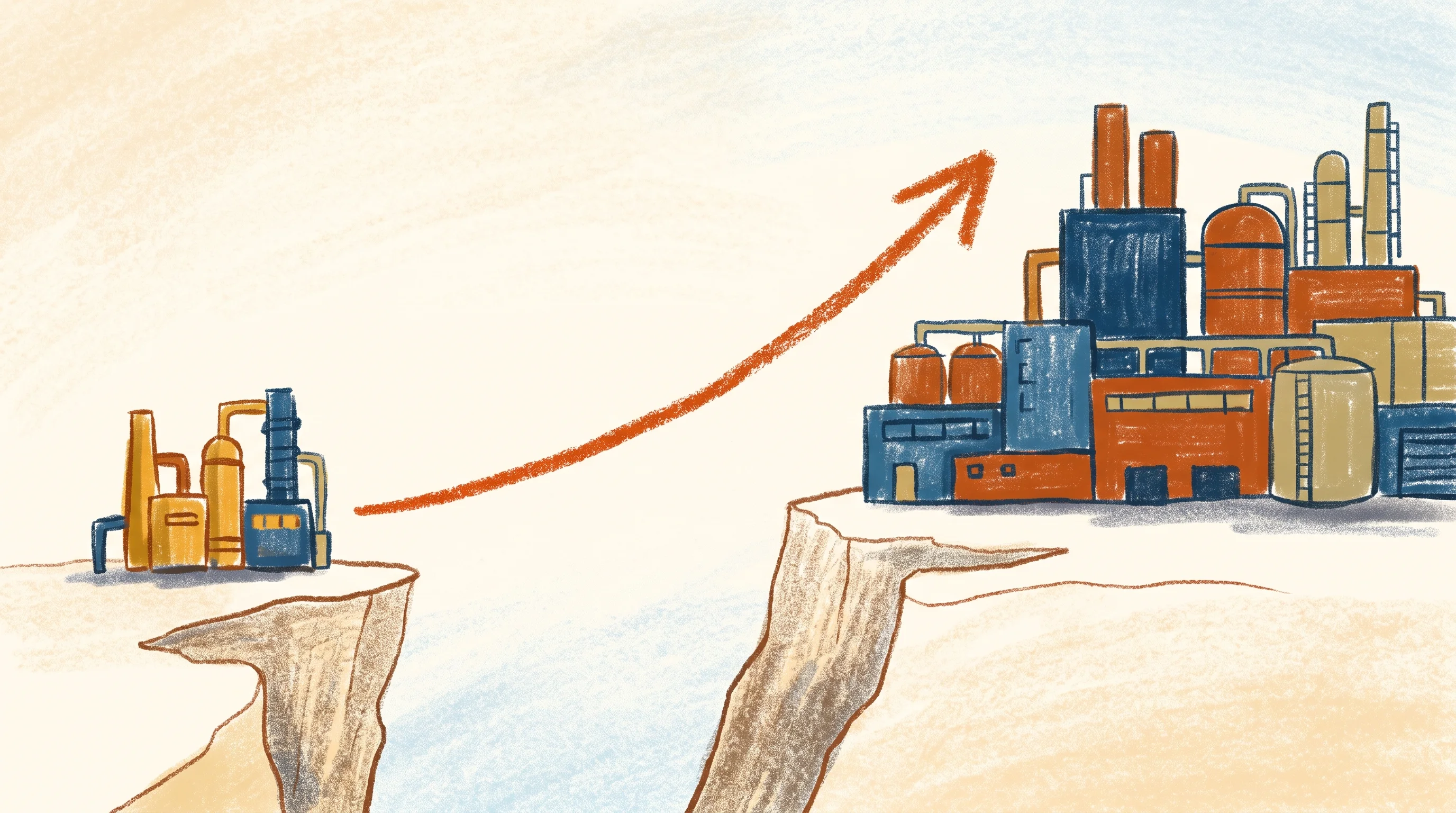
That trajectory matters in industrial technology, where the gap between pilot success and commercial viability has swallowed plenty of promising startups. UniSieve still needs to demonstrate it can manufacture membranes reliably at volume and support deployments that span continents and time zones.
A Crowded Field with Patient Timelines
UniSieve operates in a sector where progress unfolds across years, not quarters. Compact Membrane Systems began demonstrating its Optiperm propylene-propane separation technology with Brazilian petrochemical giant Braskem starting in 2019. Ardent Process Technologies said in June 2025 it was advancing its own Optiperm olefin separation system toward commercial deployment, also with Braskem. Evonik manufactures SEPURAN membranes for gas separation and flagged capacity expansion plans for this year in its financial disclosures.
The market opportunity justifies the competition. UniSieve cited figures in its 2023 seed announcement indicating that separation and purification steps consume between 10% and 15% of global energy use across industrial processes. Cement, chemicals and refining alone represent sprawling landscapes of thermal distillation columns and pressure-swing adsorption units that gulp natural gas and electricity.
Whether membrane systems can capture meaningful share in those industries remains an open question. The economics have to work not just on energy savings but on membrane replacement costs, uptime and integration complexity.
UniSieve's stated next milestone involves scaling production capacity to support multiple customer sites running simultaneously. That shift from bespoke prototypes to manufacturing discipline will test whether the startup can deliver on the energy efficiency narrative that attracted $25 million in venture backing. The company has bought itself time to find out.


