

A New Zealand startup building electric boats that fly above the water has closed a $19 million Series A to ramp up manufacturing and push into the United States. Vessev announced the funding round on August 20, 2026, led by Blackbird Ventures with participation from new investors GD1 and Rypples alongside earlier backers K1W1, Icehouse Ventures, Shasta Ventures, and NZVC.
The capital injection arrives as Vessev races to meet demand for its VS-9, an 8.95-meter carbon-fiber hydrofoil ferry that lifts entirely out of the water at speed. The company aims to hit a production clip of one vessel every five weeks by next year while simultaneously developing larger models. FlyTahoe, which operates on Lake Tahoe, signed on as Vessev's first U.S. customer.
The VS-9 carries up to 10 passengers and uses computer-controlled foils beneath the surface to raise its hull clear of the water at approximately 17 knots. Once airborne, the 3,300-kilogram craft cruises at 25 knots with a 50-nautical-mile range at light load on a 105-kilowatt-hour lithium-iron-phosphate battery. Forbes reported last May that the design slashes energy consumption fivefold compared to conventional displacement hulls, a claim Vessev attributes to dramatically reduced drag.
Standard shoreside AC power charges the battery at up to 22 kilowatts; DC fast-charging pushes that to 110 kilowatts. The vessel can plug into a typical EV charger, according to TechCrunch, which rode aboard a VS-9 in October and noted that Vessev builds its own motor, housed in the rear foil. The foils retract for shallow-water docking, and the system needs roughly 0.75 meters of wave clearance to maintain stable flight.
CEO Eric Laakmann and CTO Max Olson launched the company in 2017 under the name Seachange. Laakmann spent time on the Apple Watch team at Apple before moving to Rocket Lab, according to the company. The startup now employs 58 people at its Auckland facility on Bowden Road, Boating New Zealand reported in August, syndicating Radio New Zealand.
Maritime New Zealand certified the VS-9 for commercial passenger service on December 9, 2024. Two months later, Fullers360, an Auckland ferry operator, put a VS-9 named Kermadec into paid service carrying tourists. Fullers360 called it the "world-first electric hydrofoiling tourism experience." Vessev said its VS-9 fleet had logged more than 11,000 nautical miles as of the funding announcement.
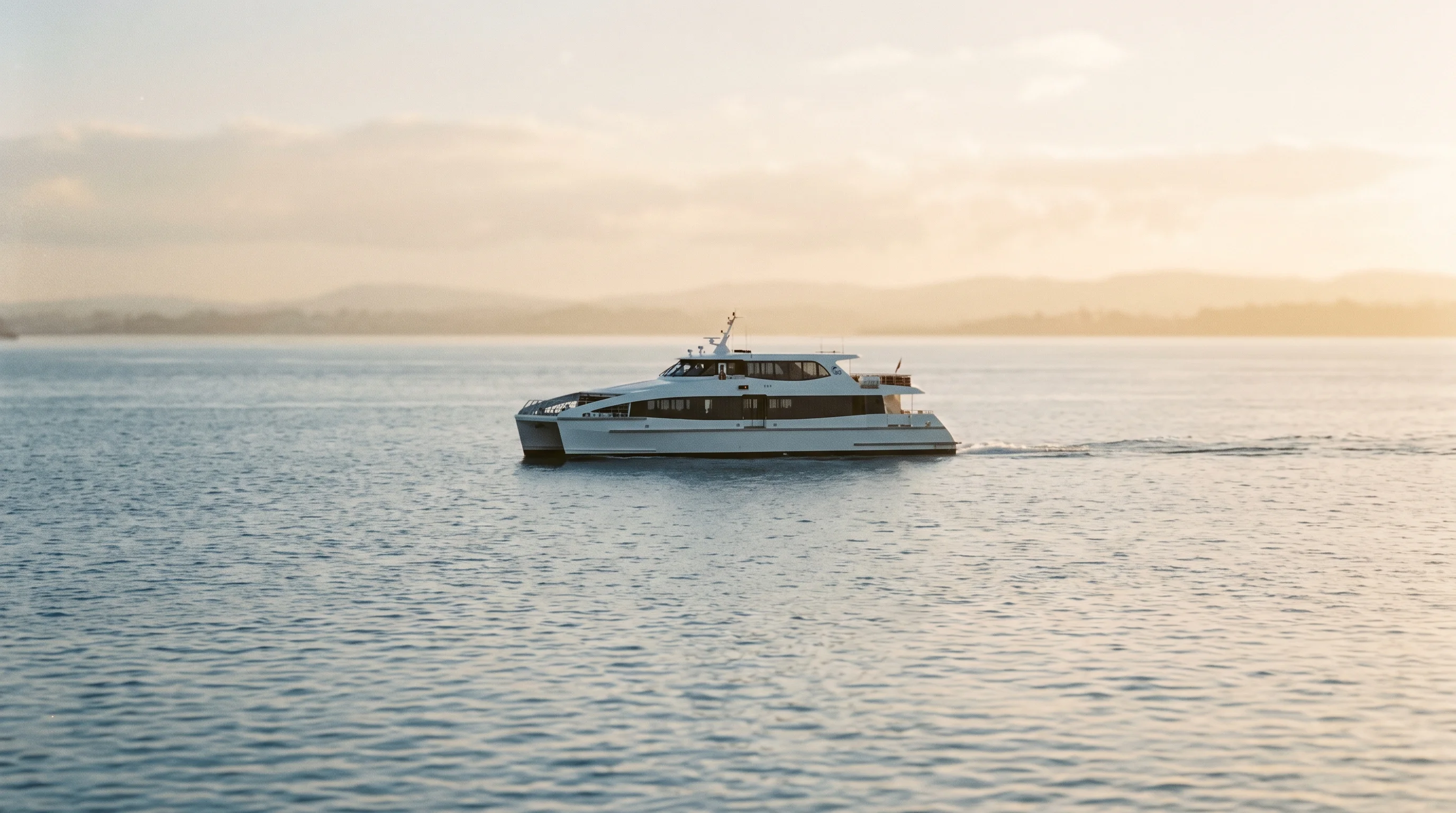
The U.S. push began with a mid-September demonstration on New York Harbor during Climate Week, operating from Brooklyn Bridge Marina. Reuters captured video on September 19. Vessev also scheduled late-September sessions at Washington DC's Navy Yard and fall demos at Lake Tahoe, according to the August announcement.
FlyTahoe will deploy its VS-9 once it secures permits from the Tahoe Regional Planning Agency, which lists a "FlyTahoe electric hydrofoil cross-lake ferry" in the appendix to its Connections 2050 Regional Transportation Plan. "We're proud to be Vessev's first U.S. customer and to add the VS-9 to our growing fleet," FlyTahoe founder and CEO Ryan Meinzer said in the release.
Beyond the United States, Vessev has projects underway in Northern Ireland, Sydney, and Hobart. Boating New Zealand reported the company is building a vessel for Taupō Hydrofoil Tours and has run trials on Lakes Wānaka and Wakatipu in New Zealand's South Island.
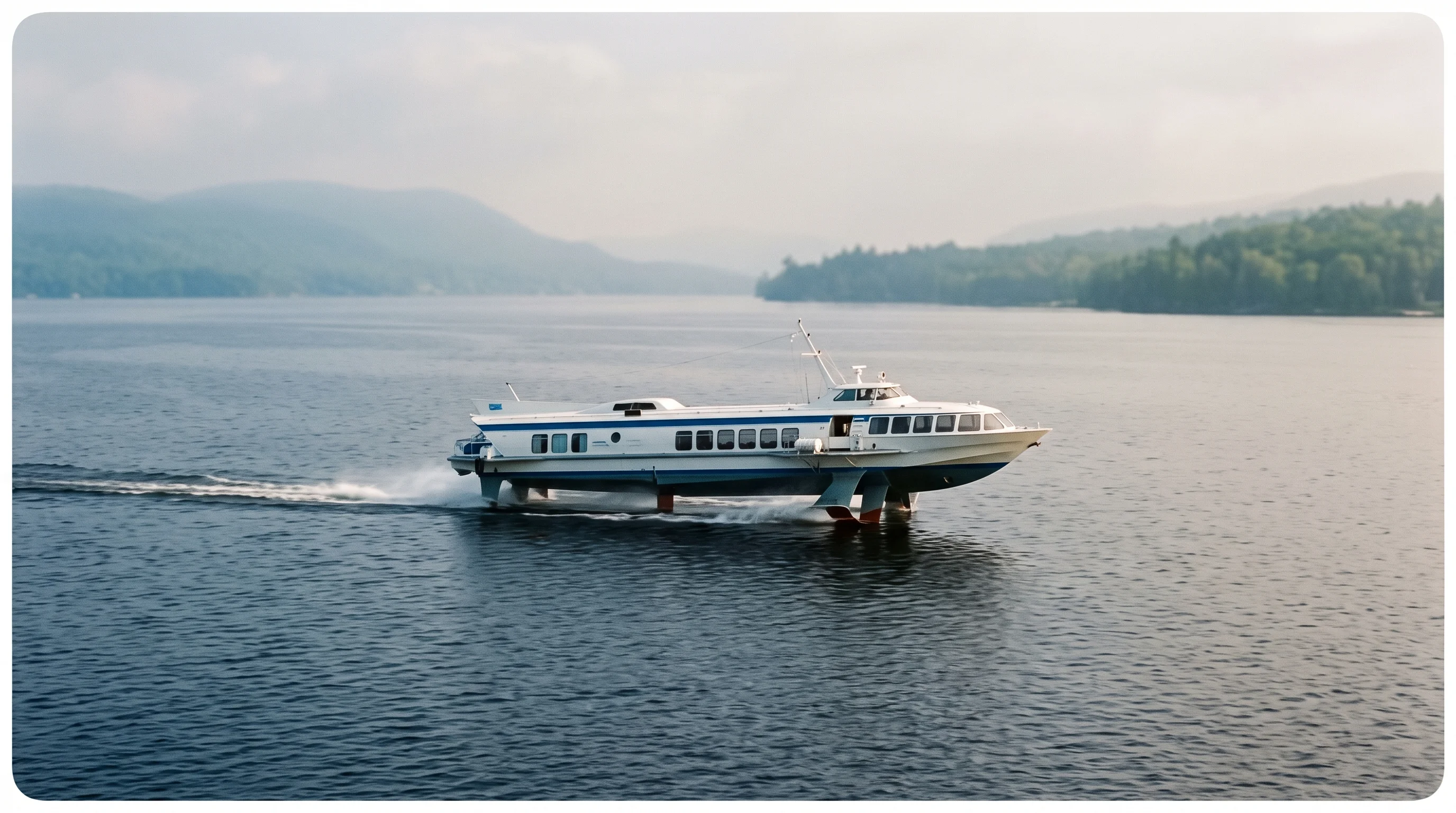
Competition in the electric hydrofoil space is heating up, though much of it operates at different scales. Candela, a Swedish builder, deployed 30-seat P-12 Shuttle hydrofoils on Stockholm public transport routes in autumn 2024, according to an EU Urban Mobility Observatory case study published in May. Candela markets a service range of about 50 nautical miles at 25 knots, similar to the VS-9. Artemis Technologies in Northern Ireland delivered two 150-passenger EF-24 hydrofoils to Belfast for trials earlier this year, targeting a segment far larger than Vessev's 10-seat craft. Navier, a U.S. startup, competes more directly in the 8-to-10-passenger space with its N30 model.
Vessev plans to direct the new funding toward serial production of the VS-9, U.S. market expansion, onboard software and telemetry upgrades, development of larger vessels, and support for planned U.S. manufacturing. The company's product roadmap shows an 11.5-meter VS-12 listed as "coming soon" and references an 18-meter, 100-seat concept in partnership materials with Fullers360, though no certification or service dates have been published for either.
"Hydrofoiling doesn't just make boats better, it redefines what's possible on water," Laakmann said in the August announcement. He wrote separately last December that within a decade, "every major body of water will have electric hydrofoiling vessels." Whether that prediction holds depends in part on how quickly Vessev can scale production and navigate the regulatory thickets that await in new markets.


