

When Julian Weaver and Christopher Oosthuizen demonstrated their brain-controlled version of the puzzle game 2048 last fall, the numbers told a sobering story. Oosthuizen's thoughts, decoded from an EEG cap and translated into keypresses, moved at roughly 1.3 bits per second. For context, ordinary human speech carries about 39 bits per second. A competent mouse user manages eight to ten.
That gap is the central problem facing Dydema, the San Francisco startup the two founders launched after stints at another Y Combinator company. The founders are aiming to bridge the gap between research labs and consumer uses, focusing on data availability and model improvement—a bet that hinges on flooding the zone with neural data to build better models.
The company, which emerged from Y Combinator's program in recent months, bills itself as "the model company for brain–computer interfaces." It offers two products: an API that classifies EEG signals, priced at pennies per query, and a data-collection service that promises to record, clean, label, and deliver neural datasets for researchers who lack the infrastructure to gather their own. Both hinge on the premise that neurotech's biggest obstacle is not hardware or algorithms but the scarcity of high-quality training data.
Whether that thesis holds may determine not just Dydema's trajectory but the broader fate of consumer brain-computer interfaces—a category that has attracted billions in venture capital yet struggles to deliver utility beyond wellness tracking and rudimentary focus metrics.
A Market in Search of a Use Case
The brain-computer interface market is notoriously hard to pin down. Estimates compiled earlier this year ranged from just over $1 billion to nearly $3 billion, depending on what counts as a BCI and who's doing the counting. Forecasts for the early 2030s span an even wider band, from $2.6 billion to more than $7 billion, according to reports from 360iResearch, Coherent Market Insights, and ResearchAndMarkets.
What's clear is that consumer devices dominate unit volumes, even if they contribute less to overall revenue. Meta's approach has been the most visible. The company began shipping its Ray-Ban glasses with a Neural Band in late 2025—though the "neural" name might be misleading to some, as the $799 wristband primarily decodes muscle signals, not brain activity, translating subtle wrist movements into gesture controls. It's electromyography, not electroencephalography, but it sidesteps the throughput ceiling that plagues actual EEG devices. TrendForce reported a forecast of 950,000 AR glasses units shipped in 2026, with Meta capturing the lion's share.
True EEG hardware has shipped in parallel, albeit with more modest commercial traction. Neurable introduced EEG-equipped headphones with plans to offer research kits for raw data streaming. Emotiv released the MN8, an in-ear device with SDK access, in March. Kyma Band opened preorders in mid-2026 for a consumer headband pursuing FDA clearance as an EEG recorder, though shipments have yet to begin. OpenBCI's multi-sensor Galea kit, which shipped a couple of years back, continues to serve academic labs and defense contractors.
None of these devices approach conversational speeds. Most deliver information in the single-digit bits per second range, suitable for toggling between a handful of mental states but far from the fluidity required for text entry or real-time communication.
The Invasive Advantage
The performance gap between consumer EEG and implanted systems remains stark. Research published in Nature a few years ago demonstrated 62 words per minute using intracortical arrays paired with a language model—roughly 125,000 words in the vocabulary. A separate study from the Chang lab at UCSF achieved a median of 78 words per minute using high-density grids placed on the brain's surface, complete with text and voice avatar outputs.
Paradromics, which closed a $250 million Series D in late September led by Pershing Square and the Ackman Oxman Institute, announced that its fully implanted Connexus system enabled a participant to compose her own sentences in real time. The first decoded message: "Okay, I have a lot to say."
Neuralink has published similar milestones. Neuralink's 2025 updates indicate participants in its trials average more than six hours of independent daily use. At the high end, users have pushed past ten bits per second in cursor control—still below the fluency of a mouse, but within striking distance.
These invasive systems share a common architecture: they record from hundreds or thousands of electrodes, capture signals with high temporal precision, and train decoders on dense streams of neural activity. They also require neurosurgery, carry infection risk, and target a narrow patient population, at least for now.
The Data Thesis

Dydema's founders see the gap between invasive and non-invasive systems as fundamentally a data problem. "Neurotech is short of data," the company's website declares. "We'll record it, for our models and for yours."
The data-collection service promises to design experiments, run recording sessions, and deliver cleaned datasets that include EEG, eye tracking, heart rate, skin conductance, and video. Clients specify what they want to measure; Dydema handles logistics. The company positions this as infrastructure for a sector that has largely operated in academic silos, where datasets are small, protocols inconsistent, and results difficult to replicate across populations.
The Wizard API, the other half of the business, automates classifier selection. A researcher uploads labeled EEG trials—say, recordings of a person imagining left-hand versus right-hand movement. The API tests multiple pretrained methods, picks the one that performs best on that user's data, and hosts it as a research-only tool. Pricing runs about a dollar to create a classifier, a dollar per month to host, and a fraction of a cent per query.
It's a modest technical offering, perhaps more pragmatic than groundbreaking. But the business model reflects a larger wager: that the next generation of neural decoders will emerge not from a single lab's breakthrough but from aggregated datasets large enough to train generalizable models—brain foundation models, in the parlance that has migrated from language AI to neuroscience.
Beacon Biosignals has pursued a parallel strategy in clinical sleep EEG, deploying home headbands to map sleep and cognition biomarkers across large patient cohorts. Both companies are betting that proprietary datasets become moats. Dydema aims for control tasks across users; Beacon for sleep phenotyping at population scale.
Regulatory Headwinds

As consumer neurotech has edged toward commercialization, privacy frameworks have struggled to keep pace. Colorado and the European Data Protection Supervisor have both taken steps to regulate neural data explicitly. Colorado became the first U.S. state to explicitly regulate neural data when it amended its privacy statute in mid-2024, adding brain signals to the list of sensitive information that companies must handle with heightened protections.
European regulators have moved faster. The European Data Protection Supervisor issued a warning last year that even low-fidelity EEG devices could infer mood, attention, and other cognitive states beyond what traditional privacy rules anticipate. The OECD weighed in with governance recommendations, urging oversight of what it called "neuro-AI infrastructures" and foundation models trained on brain data.
Privacy researchers demonstrated in 2024 that EEG signals can leak identity, enabling cross-session tracking even when users believe their data is anonymized. Rafael Yuste, a neuroscientist at Columbia, has argued for years that mental privacy deserves explicit legal protection, warning that limited-bandwidth devices may pose greater risk than high-performance clinical systems precisely because they slip beneath regulatory thresholds while still capturing enough signal to infer inner states.
The FDA's core guidance for implanted BCIs dates to 2021. A more recent update clarified that low-risk devices marketed for general wellness rather than diagnosis or treatment face lighter review, though the boundaries remain murky. Dydema's API carries a "research-only" disclaimer, a hedge that may not withstand scrutiny if the underlying models eventually power commercial products.
Founders with a Plan, Maybe
Weaver and Oosthuizen met as engineers at Syntra, another Y Combinator startup that went through the accelerator's program in 2024. Weaver had led EEG teams at Longhorn Neurotech during his time at the University of Texas at Austin. Oosthuizen came from the Structures in AI Lab at the University of Houston, working on deep learning in domains where labeled data is scarce—a background that seems tailor-made for neurotech's current bottleneck.
The company lists fewer than ten employees on LinkedIn and operates out of an address on Guerrero Street in San Francisco. It's a small team placing a large bet: that the infrastructure for brain-computer interfaces resembles the infrastructure for language models more than it resembles medical device development.
That framing carries risks. Language models scaled because text is abundant, standardized, and easy to collect at internet scale. Neural data is noisy, variable across individuals, and expensive to gather under controlled conditions. Whether Dydema can aggregate datasets large enough to train decoders that generalize—across users, across tasks, across hardware—remains an open question.
What Comes Next
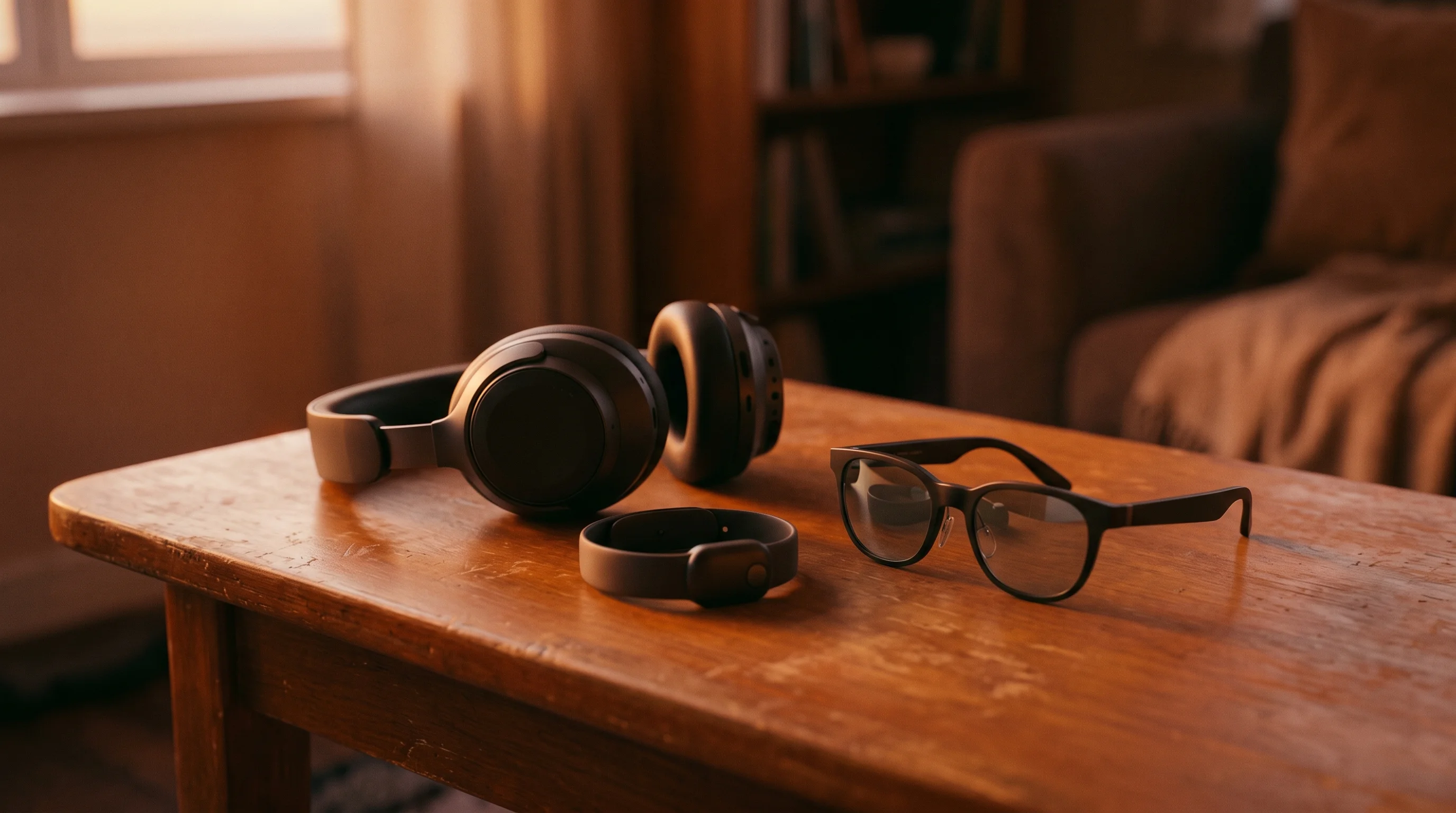
Market analysts expect mid-teens growth rates through the early 2030s, with faster expansion in categories that piggyback on established platforms: EMG wristbands paired with AR glasses, focus-tracking EEG embedded in consumer headphones, clinical speech BCIs that demonstrate reliable home use.
A Department of Defense futures assessment published in mid-2025 assigned a 60 to 70 percent likelihood that BCIs would integrate into military human-machine teaming by 2040, with decision-making speed cited as the critical performance metric. That timeline underscores both the promise and the patience required. Even optimistic projections place widespread adoption more than a decade out.
Consumer EEG still faces stubborn technical limits. Devices with limited channels suffer from low signal-to-noise ratios, motion artifacts, and training burdens that restrict high-bit-rate control, as third-party reviews have noted. The devices work well enough for tracking focus or toggling between a few mental states. They fall short of the fluency needed for text entry, let alone conversation.
The race, then, is whether non-invasive systems can approach the utility of implanted devices without surgical risk, or whether consumer BCIs remain wellness peripherals while invasive platforms capture high-value medical and communication use cases. Precision Neuroscience, which raised a quarter-billion dollars in September following FDA clearance for its cortical electrode array, has already performed more than a hundred patient procedures. Paradromics participants are decoding free speech.
Dydema's founders are betting that the throughput gap closes with enough data, that generalizable decoders emerge from scale rather than surgical precision. It's a thesis borrowed from machine learning, applied to one of the most variable substrates imaginable: the human brain. Whether the analogy holds will determine if the next generation of neural interfaces lives in the cloud or under the skull.


