

Private investors poured more than $6 billion into nuclear startups in 2026, an all-time high, according to Crunchbase data published in October. The flood of capital arrived as tech giants raced to power AI data centers with next-generation reactors, even as public markets punished the sector's newly minted stocks.
The divide between private exuberance and public wariness came to define nuclear's breakout year. By late July, PitchBook had logged $4.5 billion in global venture funding across 81 nuclear companies, putting the sector on track to surpass the previous year's total of $6.2 billion by year-end, Axios reported at the time. The October update from Crunchbase confirmed the sector had indeed shattered records.
Two companies alone raised billion-dollar rounds within weeks of each other. Commonwealth Fusion Systems closed a $1 billion equity round on July 30, bringing the Massachusetts-based startup's total haul to $4 billion. Days later, on August 3, Valar Atomics followed with its own $1 billion Series B, earmarked for factory production of small modular reactors aimed squarely at AI data centers, according to SiliconAngle.
But public investors fled in the opposite direction. X-energy raised $1.02 billion in an April IPO that initially surged before shedding roughly half its value in the months that followed, Crunchbase noted. Standard Nuclear priced its mid-July offering at $15 per share; by late September, the TRISO fuel producer was trading near $12.50, MarketBeat data shows. Deep Fission's June 18 listing experienced a significant decline in its market capitalization through early October. Oklo, which went public in 2024, experienced a substantial decline from its 2025 peak as of mid-July, according to The Motley Fool.
"Nuclear startup funding is up," Crunchbase observed in its analysis, before adding the obvious counterpoint: "public markets take a bearish turn."
AI Demand Rewrote the Equation
The rush into nuclear came down to one driver, more than anything else: the staggering electricity needs of artificial intelligence infrastructure. Data-center capital expenditures by the largest technology firms reached unprecedented levels in 2026, and data centers accounted for roughly 72 percent of all corporate clean-power purchase agreements in the Americas in 2025, according to BloombergNEF analysis published that April.
The International Energy Agency documented 45 gigawatts of small-modular-reactor capacity tied up in offtake-style agreements signed by tech companies between 2024 and 2026. Many of those deals, though, remained nonbinding.
Load forecasts climbed with alarming speed. EPRI's 2030 projection for data-center electricity consumption rose 55 to 65 percent compared with its 2024 estimate, Rhodium Group research noted in July. Lawrence Berkeley National Laboratory projected data centers could claim 11.8 percent of total U.S. electricity consumption by 2030, an update to earlier work. Between 2020 and 2025, U.S. load growth averaged 1.7 percent annually, the Energy Information Administration said, a sharp reversal from the 0.1 percent crawl of the prior decade.
Tech companies responded by signing nuclear deals at an unprecedented clip. Meta announced an agreement with TerraPower on January 9 to develop multiple Natrium plants across the United States. Nvidia partnered with Valar Atomics after the startup successfully tested powering AI chips with its reactors; the companies plan a 30-megawatt nuclear-powered AI facility in Utah, SiliconAngle reported in August. Google signed a 200-megawatt power purchase agreement with Commonwealth Fusion Systems for the first ARC fusion plant in Chesterfield County, Virginia, the companies announced in June 2025.
Regulatory shifts accelerated deployment timelines, at least on paper. The Nuclear Regulatory Commission published its final Part 53 rule on March 30, creating a risk-informed framework for advanced reactors. TerraPower received a construction permit in early March and broke ground April 23 on its first Natrium plant. Antares Nuclear's Mark-0 demonstrator reached zero-power criticality on June 4 at Idaho National Laboratory under the Department of Energy's Reactor Pilot Program, the company said.
Fuel supply bottlenecks, long a constraint, began to ease. The DOE announced contracts totaling roughly $2.7 billion for domestic high-assay low-enriched uranium enrichment, according to Cameco filings in January. Centrus received an award of up to $900 million on June 6 to expand HALEU production at its Piketon, Ohio facility.
Fusion Bets and Microreactor Plays
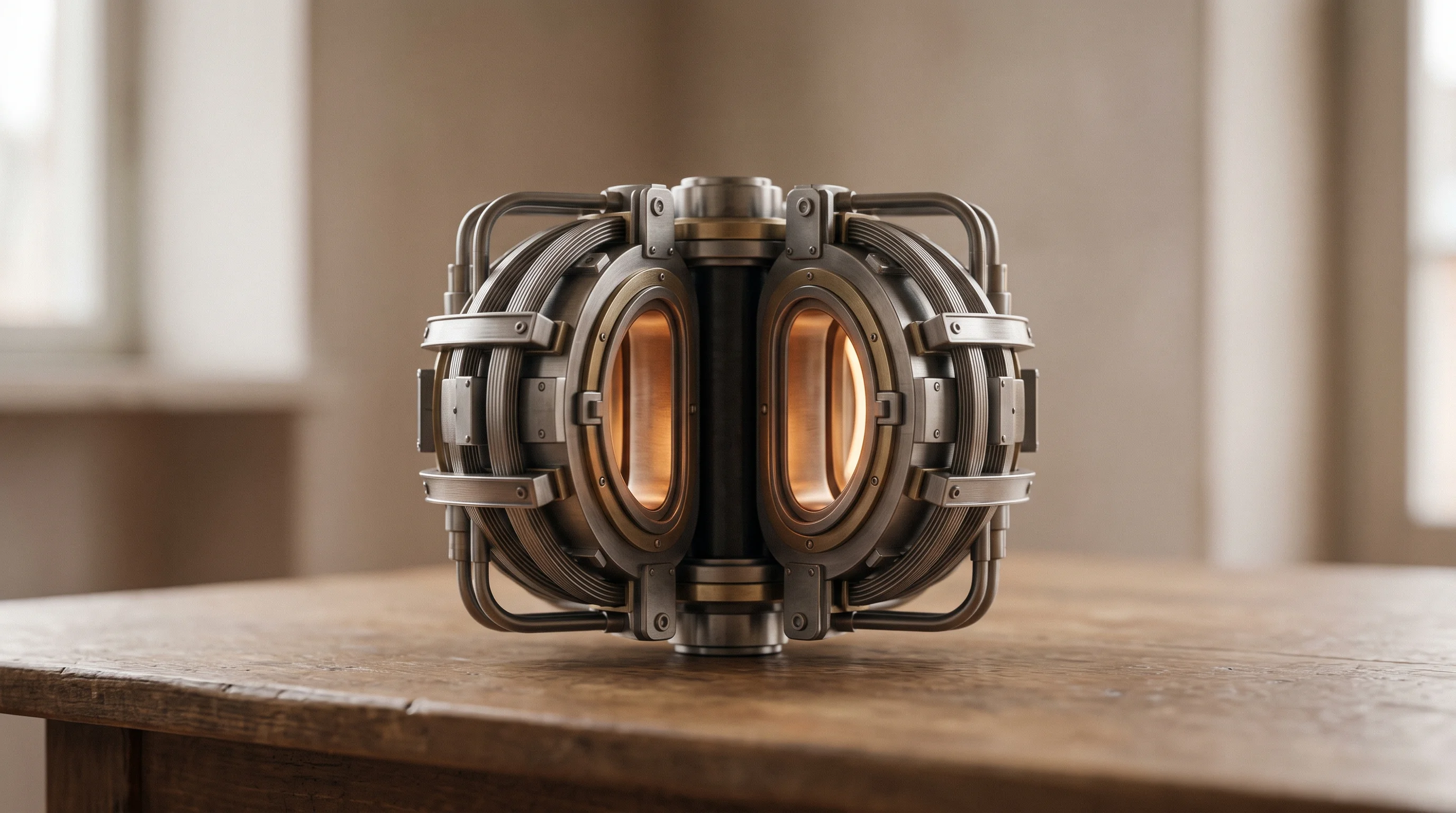
Commonwealth Fusion Systems' billion-dollar raise in July marked the largest fusion round since 2021. The startup builds tokamak reactors using high-temperature superconducting magnets, technology it believes can deliver commercial fusion power in the 2030s. Hyundai joined the investor base in September, though the company declined to disclose its post-raise valuation.
"CFS is making what once was impossible into inevitable," CEO Bob Mumgaard said in the July announcement. "In the 2030s, we will put commercial fusion on the grid. We have the science that works and the proven execution that's consistently validated by the market."
The company filed interconnection applications with PJM, the mid-Atlantic grid operator, for its Virginia plant tied to the Google power purchase agreement, according to its July 30 release.
Helion, a Washington-based fusion startup, raised $465 million on June 4 at a $15.5 billion valuation, TechCrunch reported. The company uses field-reversed configuration and direct-conversion technology. It signed what it calls the world's first fusion power purchase agreement with Microsoft in May 2023, promising 50 megawatts beginning in 2028, and later partnered with steelmaker Nucor to develop a 500-megawatt plant.
Antares Nuclear pulled in $470 million in Series C funding in late July—$370 million in equity plus $100 million in debt—to deploy transportable microreactors using TRISO fuel. The startup became the first to reach a Reactor Pilot Program criticality milestone when its Mark-0 unit went critical on June 4 at Idaho National Laboratory. The Army selected Antares on August 26 for the Janus program at Fort Bragg; CEO Jordan Bramble told Axios the contract sits "on the order of $1 billion."
"On June 4th, we won the race to criticality," Bramble said in materials surrounding the funding announcement, "and now we've shifted to the race to commercialization."
Valar Atomics targeted factory production specifically for AI data centers. The company raised $1 billion at roughly a $6 billion valuation, Bloomberg reported in July, then confirmed the Series B close on August 3. After running successful tests powering AI chips with its reactors, the startup inked a partnership with Nvidia to build that 30-megawatt nuclear-powered AI facility in Utah.
Even seed rounds reached historic scale. Bluecore Energy raised $50 million on September 8, just two months after launch, to build floating-barge small modular reactors, TechCrunch wrote. The company launched its first two barges and entered design reviews with the NRC and Coast Guard.
Germany's Focused Energy set a global fusion benchmark with a $240 million Series A for laser-fusion development, the company said in May. Thea Energy, pursuing stellarator designs, closed a $100 million Series B on May 27.
Grid Operators Brace for the Influx
Grid operators scrambled to process the wave of new projects. PJM's reformed interconnection queue drew 811 proposals totaling 220 gigawatts in its first cycle, the grid operator announced on April 29. Twenty-seven nuclear proposals and several fusion projects entered the queue alongside wind, solar, and storage.
The Federal Energy Regulatory Commission had issued Order 1920 in May 2024, mandating long-term transmission planning. Follow-on orders on June 18, 2026 pushed regions to address adequacy for large new loads, though implementation varied widely.
Local resistance emerged in pockets across the country. More than 100 potential data-center moratoria moved through local governments nationwide, the Associated Press reported in early October. Some proposals would require data centers to fund related transmission upgrades, a nonstarter for many developers.
The nuclear fuel supply chain, dormant for years, began rebuilding. Standard Nuclear, the TRISO fuel producer that went public in mid-July, signed supply deals with Radiant on August 20 and Antares on August 27. The company reported second-quarter results in late August, though investors appeared unimpressed given the stock's slide.
Military deployments picked up speed. The Army and Air Force selected companies for the Janus program in late August, naming BWXT for Fort Campbell, Antares for Fort Bragg, and Radiant for multiple sites. The Air Force had earlier picked Radiant for Buckley Space Force Base in April. Radiant's total Janus award reached as much as $750 million, the Army said.
The Long Wait for Revenue

Venture investors are betting the AI boom outlasts the current hype cycle. "Yes, energy use is a problem," Vinod Khosla told Axios in early October. "But it has spurred so much energy investment in things like fusion and super-hot geothermal. We're going to get a lot more clean energy sources because the demand finally is there for nonlinear growth."
The timeline to first commercial power, though, remains stubbornly uncertain. Commonwealth Fusion Systems targets sometime in the 2030s, a wide window. Helion's Microsoft power purchase agreement calls for delivery beginning in 2028, an ambitious target that will test the startup's execution. TerraPower's Natrium plant, now under construction in Wyoming, won't connect to the grid for several years.
Public markets will ultimately test whether revenue can catch up to the hype. X-energy, Standard Nuclear, and Deep Fission all face mounting pressure to demonstrate commercial traction after their bruising post-IPO slides. The next wave of exits, likely including some of the billion-dollar privately funded names, will reveal whether institutional investors share venture capital's conviction or see a speculative bubble.
Regulatory risk persists despite recent reforms. The NRC's Part 53 rule and streamlined reviews lower some barriers, but first-of-a-kind licensing still consumes years. Dentons, the law firm, noted in mid-July that nuclear-to-data-center colocation faces financing challenges under NRC doctrines around contracting, control, and timelines—issues that could delay projects even with construction permits in hand.
Fuel supply constraints loom over the entire sector. The HALEU production ramp at Centrus and other facilities must hit targets, or advanced-reactor deployments will stall. Standard Nuclear's TRISO production sits on the critical path for multiple reactor designs, giving the struggling public company outsized importance.
The International Energy Agency cautioned in April that many data-center offtake agreements remain early-stage and nonbinding. Should AI infrastructure spending slow or power demand projections drop, nuclear startups holding long-dated purchase agreements could face renegotiations or outright cancellations, a scenario that would chill the investment climate quickly.
Founders and venture capitalists watching the space should track a few signals in the year ahead: whether Meta's multi-plant TerraPower commitment moves to firm engineering, procurement, and construction contracts; how quickly the first fusion power purchase agreements hit commercial operation; and whether 2027 venture funding sustains the $6 billion pace or reverts closer to the pre-2025 baseline of a few billion annually. Nuclear startups raised a record sum in 2026, Crunchbase data confirms. Whether the reactors themselves show up remains an open question.


